

A new play explores the lives of migrant construction workers in the UK, using humour, real-life experiences and physical theatre to capture the banter, friendships and absurd moments that make life on site bearable, alongside the pressures that often go unseen. Ahead of the play’s premiere in London on 12-14 November, playwright Inna Cebotari explains how Three Little Pigs aims to add to the public debate about how best to support the wellbeing of construction workers.
Features
Who is the wolf in your life? Listening to the people behind the hard hat
By
on 02 October 2026
Three Little Pigs or Chronicles of the Building Site, like some of the other theatre productions we create at Kinth Square, an independent theatre company based in London, is the kind of artistic project that needs to be written and put on stage. There’s an urgency to it. It deals with themes and subjects that simply aren’t represented – and sometimes it feels as though it’s more convenient that way. That we just don’t talk about them. But talking about them is necessary.
You walk around London, or pretty much any city in the UK, and you see construction sites everywhere. You get on the Tube and you constantly see people in work clothes. You see them either incredibly early in the morning, around five, or in the evening when they’re coming back from work, around six. Quite often, you see them asleep.
You look at houses and buildings, and if there’s a particularly striking building, something beautifully conceived or really well built, you usually wonder about the person behind it. Who designed it? Who was the architect? Who came up with the idea? But we don’t usually think about how many people actually worked on it. Who laid the bricks, fitted the windows and put on the roof. Somehow, we just don’t think about that.

Family life
Before construction became the subject of a play, it became part of our family life.
My husband, Sava, and I had spent years building professional lives and worked with theatre across Moldova, Romania, Ukraine, Belarus, Russia, Germany, France and Spain. Sava is an award-winning theatre director, dramaturg and educator. His work had included directing productions, developing new writing and teaching acting at the Moscow Art Theatre School.
Then the pandemic came. Theatres closed. Like so many people, we watched the lives we had carefully constructed become uncertain almost overnight.
We moved to London and had to start again. Construction became one of the ways Sava could support our family. He went from working on stage to learning a completely new trade. For a long while, it looked as though this was simply what he was going to be doing from then on. Theatres remained closed to us even after the pandemic was over and things had started going back to normal. It doesn’t matter who you were in your “previous life”. Now you work on a construction site, and you follow the rules.
For Sava, being self-employed meant having very little protection.
You don’t get paid holidays. If you take time off because you’re physically unwell, emotionally exhausted, or for any other reason, you’re on your own. So, you simply can’t afford to stop. You work as much as you can. You work Saturdays. You work Sundays if the work is there. And you try not to complain, because nobody is irreplaceable. There’s always someone else who can take your place.
What surprises you is that people often think construction work equals good money. Of course it does – for some people. For most, it doesn’t.
And again, you’re self-employed. If something happens to you, you’re on your own. If you have a family as well, and you’re the only person earning, then you barely make ends meet. You’re constantly borrowing money just to pay the rent.
You live in a big shared house where everyone rents a room. There might be another couple living there, but otherwise you’ll have around five men sharing a house, all of them working in construction. They all leave for work before dawn and come back in the evening. You start seeing their everyday routines. What they eat. What they dream about. What they want from life. And without really meaning to, you become a witness to their Sundays – that seem to disappear almost as soon as they begin. All these construction workers come downstairs into the living room and sit in different corners of the room, talking online to their families back home. We used to change the shared houses quite often. Sometimes we’d move after just two months, and then do it all again, and again. So, over time, we ended up living around so many different people and seeing so many different lives.
But perhaps our own experience made me alert to something that would eventually become fundamental to the play: the person wearing the hard hat has a whole life you cannot see.
Artistic project
For more than three years, construction existed in our family before it existed as an artistic project.
I’ve always admired Sava’s stubbornness, and this unstoppable need he has to create and to make theatre. He would be on a construction site, working, and at the same time imagining a scene for Three Little Pigs or Chronicles of the Building Site, which will run at the Cockpit Theatre in London on 12-14 November as part of the Voila! Theatre Festival. Then another scene. And another. And all of it would begin with something he, or someone he knows, had experienced on the construction site.
Stories about different trades and languages, jokes and arguments, skills and pressures; from people whose families have worked in this field for generations to those who just got in, share accommodation while living away from home; people sending money to families elsewhere, and people whose lives before construction were invisible to those working beside them.
Later, when I began to meet people, our conversations did not start with a questionnaire, and I have never regarded them as a representative study of the construction workforce. They grew through trust. It all started with people Sava worked with; they knew him personally, trusted him and wanted to meet. These people introduced me to somebody else; whether that was a colleague or a friend. One conversation led to another.
I realised that this project could never have happened in quite the same way without those personal relationships when I started approaching people I didn’t know. For example, if I saw construction workers on their lunch break, I would go over and try to start a conversation. Nobody was willing to talk to me. They looked at me suspiciously, wondering what I wanted from them. And that was when I realised how much of a difference it made that Sava actually knew these people personally. Because they trusted him, they trusted us with their stories.
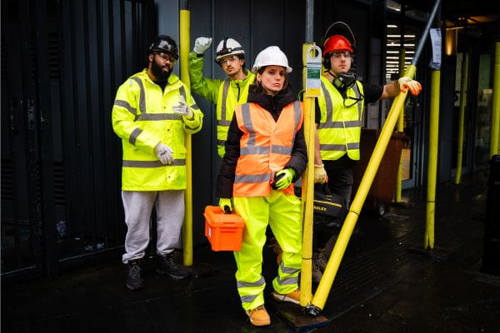
Confidential discussions with construction workers
Eventually, as part of the research I undertook in preparation for writing the script for the play, Three Little Pigs or Chronicles of the Building Site, I had spoken confidentially and informally with more than 100 people connected to construction.
The questions were not only about work.
I wanted to know who was waiting for them at home. What they had hoped to become when they were children. What they missed. How the work changed them. What they were proud of. Whether they went to the theatre.
And one of those seemingly simple questions unexpectedly gave the project its theatrical form. I asked a construction worker whether he had ever been to the theatre. At first, he said no.
Never?
He thought about it.
Actually, yes. Once, when he was a child.
He could remember very little about the performance itself. There had been actors wearing false pig noses.
But he remembered liking it.
It was The Three Little Pigs, the children’s fable about three pigs who build houses of different materials, in a bid to frustrate the Big Bad Wolf’s attempts to blow them down.
That conversation stayed with me. So did the story. And then I started adding details to it. I imagined him going to the theatre with his mother, who was probably still alive then, and having an ice cream together after the performance.
Suddenly, it wasn’t about remembering a play: it became about remembering a day in his life when the world was different, before the responsibilities and worries of adulthood, when his mother was there and somebody else was looking after him.
Three little pigs leave home. They build houses. They choose materials. They try to make themselves safe.
And somewhere outside is the Wolf.
So, I began asking:
Who is the Wolf in your life?
The answers were never the same.
For one person, the Wolf was the pandemic – the event that destroyed the professional life he had known and forced him to begin again.
Another man, whose family remained in his
home country, told me that he usually went home only once a year. Travelling back and forth was expensive.
He had come to Britain to earn money, and he would rather buy something for his children than spend that money on another flight. Perhaps, he said, the Wolf was distance, or longing for home.
Someone answered simply:
“The Wolf is the human being.”
Another spoke about the financial responsibility of supporting parents, siblings and their families while leaving almost nothing for himself.
Only a few weeks ago, after speaking with a construction worker about work, life and his experiences on UK sites, I asked him the same question.
He smiled slightly, as though the question had taken him somewhere unexpected, and in that moment, it was as though I read in his eyes: “Wolf? Who is the wolf?”
He remembered a saying from home: “The sheep spends its whole life fearing the wolf, only to be eaten by the shepherd.”
He wasn’t sure whether he had answered my question exactly. It was simply what had come to him at that moment.
I didn’t want to explain the metaphor for him.
I still don’t.
Perhaps that is the point. There is no single Wolf.
The meetings didn’t stop. I still meet people, we still have long conversations, and I still hear at the end,
“Thank you. It was good to talk to someone who listens”.
And not once, but many times, they thank me, saying they can’t remember when they last spoke this much. People I spoke to described a working culture in which there was little space for conversation beyond the job itself.
This was something that struck Sava as well, as the director of the play. Especially coming from the theatre world, where we’re used to talking, analysing, asking questions. Sava was telling me how strange it felt on site. How people would look at him a bit weird when he was speaking to them, showing an interest, trying to have a conversation.
As Sava mentioned, there isn’t much talking on site. What you hear more often is, “Push, push, push.”
And a lot of swearing.
What do we carry through the gates?
On a construction site, safety is deliberately visible: hard hats, gloves, boots, hi-vis, signage, inductions, procedures. All of those things matter. But the conversations made me increasingly curious about something much harder to see: What is the person wearing all that protective equipment carrying with them every day?
A difficult phone call from home. Debt. A child they haven’t seen for months. Responsibility for relatives elsewhere. Exhaustion at work. Loneliness. Fear about the future. The pressure of needing the hours and not feeling able to say no.
People do not leave the rest of their lives outside the gates when they arrive for work.
Mental wellbeing rarely emerged in these conversations as a separate subject labelled “mental health”. It lived inside stories about money, masculinity, migration, relationships, family, dignity, work, identity and belonging.
The wider picture is serious. In 2021, 507 construction workers in England and Wales died by suicide, equivalent to around two deaths every working day. The figure is based on analysis of ONS data by Lighthouse Charity and Glasgow Caledonian University.
(More recent ONS statistical releases continue to publish suicide registrations by occupation; the 2024 figures are provisional and should not be used on their own to estimate occupational suicide risk.)
So, how much can we really know about somebody from the job they are doing today?
A job is not a biography.
Sava knew that question personally. Someone meeting him on a construction site would not necessarily know that the man working beside them had spent years directing theatre and teaching actors. But what surprised me most was that some people I talked with didn’t really care, or didn’t find anything extraordinary about it. On the contrary, they saw it as a normality.
Through my conversations, I discovered something I had never expected. I met people working on UK construction sites who had also lived professional lives in opera, for example. I did not want to reproduce anyone’s biography on stage. Instead, those encounters became material for fiction. I created an entirely fictional character who works in construction, but whose other identity as an opera soloist gradually becomes visible. The people around him think they know who he is. Then they hear him sing. By the end of the first part of the play, workers telling a story gradually give way to something resembling a contemporary opera performance, culminating in a live aria. The costumes carry some of that collision too: hi-vis and workwear sit alongside white bow ties. White gloves can belong to a construction site, but they can also belong to performers.
This invites the audience to consider the question, “How many lives do we fail to see because we think a person’s current job tells us who they are?”
By then, The Three Little Pigs had become much more than the title of a children’s story somebody remembered.
It gave me the architecture of the play.
Three Little Pigs or Chronicles of the Building Site is entirely fictional.
In the play, Mummy Pig reads to her three children from a book called Chronicles of the Building Site. Its stories belong to the human world: construction sites, workers, airports, families – but as the piglets listen, they imagine themselves inside them.
The audience is drawn into the same game.
At one moment, spectators are treated as though they have arrived for a Monday morning site induction. At another, they are passengers waiting for a flight. The audience remains seated, but the world around it keeps changing.
The play is built a little like the buildings it talks about: one layer sits behind another, and not everything is visible at first.
That principle emerged from the conversations themselves.
You see somebody.
You think you understand who they are.
Then you listen.
And the same person begins to look different.
The people who trusted me with their experiences did not give me their lives so that I could reproduce them on stage. None of those I interviewed appears as a character, and no individual biography is transferred into the play. These accounts informed its world, textures, contradictions and questions.
Where real quotations are used in this article, they are published with the contributors’ permission and anonymously. Names, employers and identifying details remain undisclosed – to protect their identities.

Building the production
It took around two years from construction first becoming part of our family life for the idea of Three Little Pigs to take a recognisable theatrical form.
Then came another kind of building process.
We applied to Arts Council England. We were unsuccessful. We tried again. There were several refusals along the way. We kept developing the idea, listening, rewriting and applying. Eventually, Arts Council England supported the project.
In March 2026, we undertook our first development week through Arcola Lab, culminating in an invited sharing at Arcola Theatre. They have since asked us back for another such week in October.
From 12–14 November 2026, Three Little Pigs or Chronicles of the Building Site will have its first public performances at The Cockpit in London as part of Voila! Theatre Festival.
Four performers move between people and pigs, the human world and the imagined one. The production brings together physical theatre, visual storytelling, humour, live performance, sound, lighting, scenography and installation.
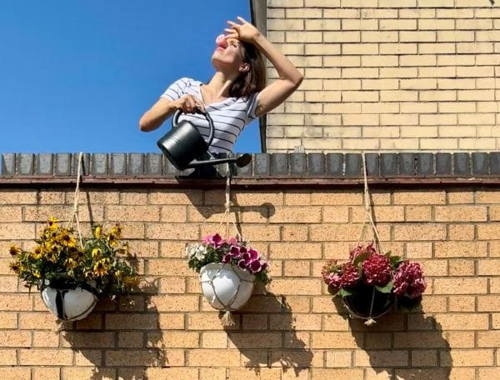
Three hard hats, for example, become flowerpots, each containing different flowers.
I like that image because from a distance the objects appear similar. Look more closely and each contains a life of its own.
There are other images in the production that reveal themselves more slowly. Some mean one thing when you first encounter them and something else once you know more. I would rather not explain those, but invite people to come and discover them.
People who make the difference
Along the way I met wonderful, creative, sensitive, intelligent people.
One of them, who has kindly agreed to be named, is George Fanea. I originally approached him for a discussion about his experience in the construction field, but instead, after listening to me talking about the project’s intentions and ambitions, and how passionate we are, he suddenly stopped me and said he’s interested in getting involved. This is how he became one of our early partners and supporters. MD Developments (London) Ltd were also among the first early industry partners. We are very grateful for their support.
We are still looking for partners who understand that narrative is a powerful tool, one that can create real, far-reaching change by bringing these stories to the stage, creating visibility, and opening up conversations.
We are looking for people who will do more than praise the project and step back – people who will offer real, tangible support. That could make a huge difference in bringing this production to life in the way we imagined it.
We are still seeking funding to help us deliver the November production and, importantly, to develop the project beyond these first performances and take it on tour in 2027. Financial support would directly contribute to production costs, touring, and creating opportunities for the work to reach wider audiences.
The project opens up a delicate and urgent conversation around mental health in the construction industry, and we are already seeing interest from companies and organisations within the construction sector. We believe there is a real opportunity to build meaningful partnerships between the arts and the industry and to create a space where these conversations can be heard.
This matters more than ever at a time when arts funding is being cut so drastically. It’s getting harder and harder to bring productions to the stage. So, when someone says, “I believe in this, I want to help”, it matters a lot. Sometimes that is what makes the work possible at all.
In that same spirit, this led us to the Lighthouse Charity, which is dedicated to the emotional, physical and financial wellbeing of construction workers and their families. They became our official wellbeing partners, and that has been something truly extraordinary for us.
Their support has meant so much because it connects directly with what we are trying to do through the production: not only to tell a story, but to create a space where people can feel seen, supported and connected.
What can listening change?
More than 100 conversations do not make me an expert on the UK construction workforce.
Nor was I trying to become one.
I am a playwright who listens. And listening left me with questions.
What happens when providing for your family requires being separated from it?
What happens to someone’s sense of identity when migration changes not only where they live, but how the world sees them?
What is the person working beside us carrying that we cannot see?
Perhaps there is something in the questions that have emerged for me, as well as in the way I have constructed the dramaturgy of the play, for employers, health and safety professionals, wellbeing teams, trade unions, industry organisations and, above all, for everyone who works side by side.
Wellbeing support does not necessarily begin only when someone announces, or even realises, that they have a mental health problem.
My experience through all these encounters has shown me that the person arriving through the gates in the morning is not simply a pair of hands performing a task. There is a whole human life inside the PPE. And at the same time, I’d like the reverse to happen too: after seeing Three Little Pigs or Chronicles of the Building Site, I hope also audiences will look differently at the people who work in construction.
The next day, when they pass a building site, see workers heading to or from work, or taking a lunch break in the park, perhaps they will remember that behind every hi-vis vest and hard hat is a person with a story, and that story matters.
In that sense, the journey works both ways: we bring the building world into the theatre, and ideally the theatre sends audiences back outside with a little more understanding and respect for the people who build the world around us. The play also creates a unique opportunity to open up a wider conversation about wellbeing and mental health by looking at the bigger picture: working conditions, the pressures people face, and the fact that workers can often be left to deal with difficulties on their own. The well is deep.
I want people from across construction, workers and their families to come to see Three Little Pigs or Chronicles of the Building Site. As well as people responsible for the health, safety and wellbeing
of others.
Not because the production tells anyone what to think. It doesn’t.
Theatre can do something different. It can take a familiar story and make it unfamiliar again. It can make us laugh before we realise that something is serious. It can make us look twice at someone we thought we understood.
And sometimes it can return us to our own lives carrying a question. Mine began with a construction worker remembering the only theatre performance he could recall seeing as a child.
So, more than 100 conversations later, I am still asking the question that grew from that memory: Who is the Wolf in your life?
Note: Sava, the production’s director, and George Fanea, director of Stone & More Ltd, our early industry partner, have given written consent to being named in this article in the context in which they appear.
Where direct quotations are used in this article, they are published anonymously and with the contributors’ permission. The names, employers and identifying details of those contributors are withheld to protect their identities.
In certain passages, the second-person voice is a deliberate dramaturgical device adapted from Mummy Pig’s monologue in 'Three Little Pigs or Chronicles of the Building Site'. Although phrased as “you”, these passages draw on the author’s own lived experience and are not intended as general statements about all construction workers or the construction industry.
Three Little Pigs or Chronicles of the Building Site, will run on 12–14 November 2026 at The Cockpit, London, as part of Voila! Theatre Festival. The play is written by Inna Cebotari, directed by Sava Cebotari and produced by Kinth Square.
To book tickets, go to:
tickets.thecockpit.org.uk/sales/shows/voila-festival-2026/three-little-pigs
Inna Cebotari is writer and artistic director at Kinth Square theatre company.

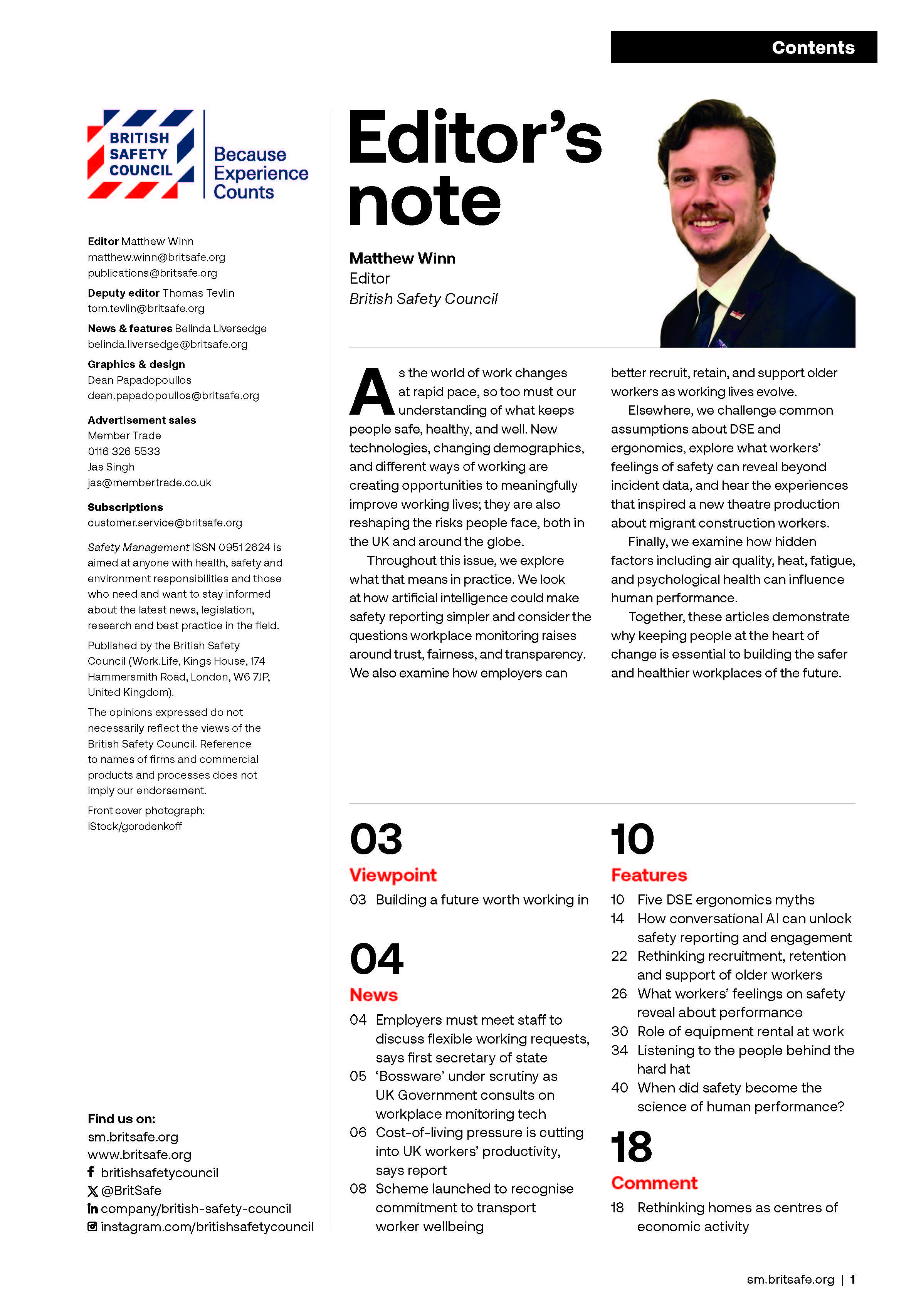
FEATURES

Who is the wolf in your life? Listening to the people behind the hard hat
By Inna Cebotari, Kinth Square on 02 October 2026
A new play explores the lives of migrant construction workers in the UK, using humour, real-life experiences and physical theatre to capture the banter, friendships and absurd moments that make life on site bearable, alongside the pressures that often go unseen. Ahead of the play’s premiere in London on 12-14 November, playwright Inna Cebotari explains how Three Little Pigs aims to add to the public debate about how best to support the wellbeing of construction workers.
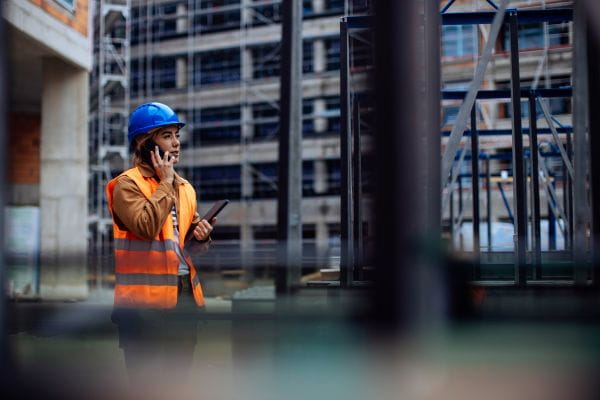
Eliminating barriers in reporting: how conversational AI can unlock safety engagement
By Julian Taylor, ecoPortal on 04 October 2026
Online reporting systems that require lengthy and cumbersome form filling and typing can discourage workers from reporting safety incidents and concerns. However, AI-powered mobile apps that allow reporting simply by speaking or taking photos can simplify and speed up the process, boosting reporting rates and overall staff engagement with safety systems and culture.

Why UK employers need to rethink recruitment, retention and support for older workers
By Orchie Bandyopadhyay on 04 October 2026
With workers over the age of 50 now comprising almost one third of the entire UK workforce, recruiting and training older workers is now core to the success of the economy. However, not all employers are offering what’s needed to retain and recruit older workers, and ageist attitudes, limited flexible working opportunities, and employment support that doesn’t fit with health, caring, or other responsibilities are leaving too many people locked out of the labour market.