
Amey’s Zero Code behavioural framework encourages everyone on-site to take personal responsibility for health and safety, and the root of this approach is creating a psychologically safe environment where everyone has the confidence and authority to stop work and speak up if they see anything unsafe.
Features
Safety as culture: how Amey’s Zero Code still leads the way
By
on 16 March 2026
The infrastructure sector is one of the most complex and high‑risk industries in the UK. From operating heavy machinery to working in confined spaces, the potential for accidents is ever‑present. At Amey, we sit at the heart of this complexity, delivering full life‑cycle engineering, operations and decarbonisation solutions across sectors, and with that comes a clear responsibility to keep our people safe.
But the industry has evolved. Health and safety are no longer confined to ticking compliance boxes. Today, it is about cultivating environments where people feel psychologically safe, where they are empowered to speak up, challenge unsafe practices, and look out for one another. That is why, in 2017, we introduced the Zero Code: a simple but powerful framework that has embedded safety into the culture of our organisation.
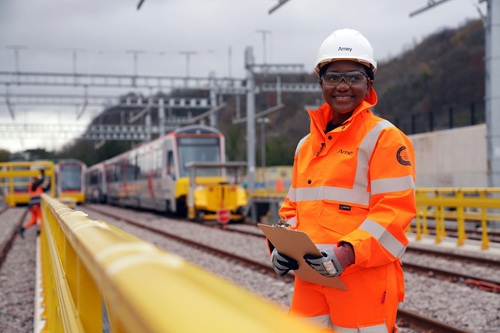 The Zero Code is a simple safety framework that outlines what Amey expects from everyone who works on their behalf. Photograph: Amey
What safety looks like on the ground?
When I stepped into the role of health, safety and assurance director at Amey, I knew we were dealing with more than just high-risk environments, we were dealing with people.
People who show up every day to do complex, demanding work, and hazards are real and ever-present. It is thousands of individuals helping Amey deliver its best work for our clients, and that means we have a responsibility to protect them with absolute clarity and conviction. From a leadership perspective, it simply boils down to this: we want everybody to get home safe and well, every single day.
Through my many employee engagement visits, talking to teams and employees across the business about how we could ensure that happens, I found, many people did not fully understand their part in owning safety.
They knew the rules, but they did not always feel confident in applying them. They did not always feel safe to speak up when something did not look right. That is when we realised: if we were going to make a meaningful impact, we had to go deeper to bringing our people along our journey in a manner which resonates with them. We had to evolve our culture where safety is seen as everybody’s business, as a shared value.
Introducing Zero Code
Back in 2017, the discourse surrounding safety was still dominated by procedures, but we understood then, and we understand even more now, that true safety also comes from empowering people. It comes from creating psychologically safe environments where individuals feel confident to raise concerns, challenge unsafe practices and take ownership of their wellbeing and the wellbeing of others.
The Zero Code was our answer to that challenge. It is a simple safety framework that outlines what we expect from everyone who works on our behalf, from employees to subcontractors and joint venture partners to stay safe and well. It is embedded into our supply charter and contracts to ensure safety is a shared responsibility from day one.
The framework is built on four clear principles: Ready to Work, Kitted Out, Stick to the Plan, Stay Alert, and at its centre is what we call the Big Red Button. This is a clear and visible commitment that if anyone sees something unsafe, they have the authority to stop work immediately. It is not just symbolic, it is a non‑negotiable expectation across our sites. The Big Red Button empowers every individual, whether employee, subcontractor or partner, to act decisively in the moment to protect themselves and others.
The simplicity, clarity and adaptability of Zero Code really have given us a solid bedrock to continually build on.
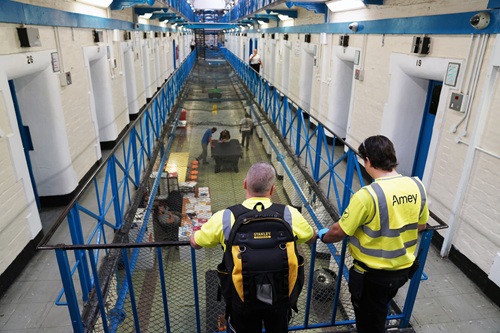 "Ultimately, health and safety is a journey, not a destination." Photograph: Amey
Lessons for the industry
Many organisations continue to build policies and frameworks around ‘work as imagined, not as work as done’. Yet frontline workers often rely on team knowledge, supervisors and local briefings. That is why health and safety messaging must be straightforward and relatable. Strip away the jargon and focus on practical clarity so risks are fully understood before work commences.
Never underestimate the ‘what’s in it for me’, and one of the most effective ways we have done this at Amey is through storytelling. Our Real People, Real Stories video series shares honest accounts of safety incidents and their ripple effects on families and colleagues. These stories are powerful, memorable and are transforming how we talk about safety across the business.
Keep challenging the ‘norm’ and build on improvements, and do not be afraid to bring in a fresh perspective. About 18 months ago, we partnered with a leading behavioural safety consultancy, to assess our safety culture. They interviewed around 500 people across all levels of the business and gave us a clear view of our strengths, gaps and opportunities.
That external perspective helped challenge assumptions, sharpen our focus and build on our Zero Code framework with a deeper focus on human factors and the latest behavioural science techniques.
Most importantly, seek counsel and sponsorship from your operational leaders. At Amey, our safety culture plans are owned and championed by our operational sponsors, with support from safety teams; that ownership makes safety relatable and real. It shifts the conversation from ‘safety telling’ to ‘safety leading’, and embeds it into the heart of how we work.
What does the road ahead look like?
Predicting accidents before they happen – that is the ambition. And with the power of artificial intelligence, we are getting closer. Imagine being able to analyse patterns, overlay human insight and proactively update risk assessments based on probability, not just hindsight. That is where we are heading.
Technology is a major part of our roadmap. We are investing heavily in AI, smart dashboards and wearable tech, tools that give our people real-time access to safety intelligence and allow us to make faster, more informed decisions. But it is not just about data. It is about combining digital insight with human judgement. Without that balance, technology alone can be dangerous.
We are also expanding internationally, which brings new challenges. Our governance structures are being designed to be adaptable and scalable, so they can be moulded to fit different geographies while maintaining our core standards.
Ultimately, health and safety is a journey, not a destination. I truly believe that at the heart of good health and safety, all injury is avoidable and there is no such thing as inevitable injury. When we get to that point of everybody getting home safe and well every day this does not mean the work is done. We keep going. We keep learning. We keep evolving and continue to build a future where safety is proactive, predictive, and deeply human.
For more information see:
amey.co.uk/about-us/health-and-safety
Robert Doyle is health, safety and assurance director at Amey. He recently featured in an episode of British Safety Council's podcast, 'Health and Safety Uncut'. In the episode, Rob explains how Amey’s Zero Code behavioural framework encourages everyone on-site to take personal responsibility for health and safety. Listen here.
FEATURES
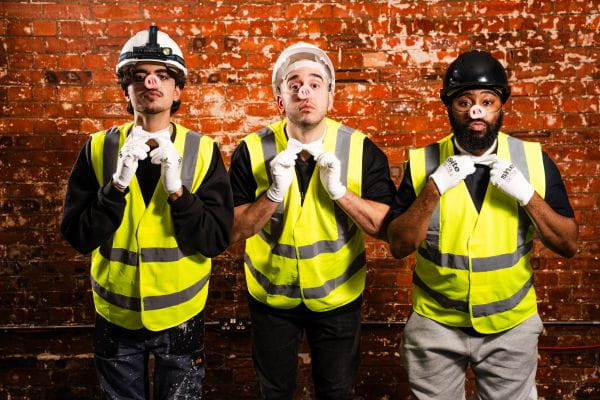
Who is the wolf in your life? Listening to the people behind the hard hat
By Inna Cebotari, Kinth Square on 02 October 2026
A new play explores the lives of migrant construction workers in the UK, using humour, real-life experiences and physical theatre to capture the banter, friendships and absurd moments that make life on site bearable, alongside the pressures that often go unseen. Ahead of the play’s premiere in London on 12-14 November, playwright Inna Cebotari explains how Three Little Pigs aims to add to the public debate about how best to support the wellbeing of construction workers.
Eliminating barriers in reporting: how conversational AI can unlock safety engagement
By Julian Taylor, ecoPortal on 04 October 2026
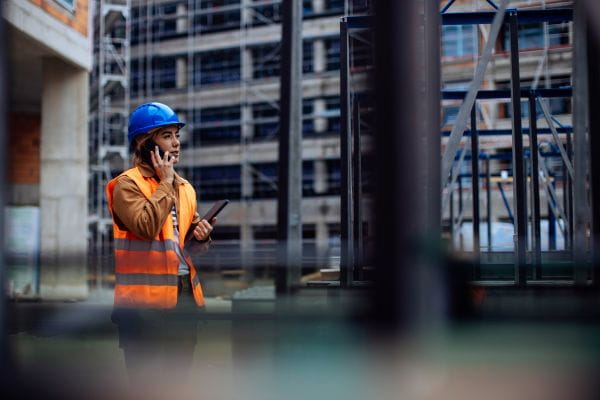
Online reporting systems that require lengthy and cumbersome form filling and typing can discourage workers from reporting safety incidents and concerns. However, AI-powered mobile apps that allow reporting simply by speaking can simplify and speed up the process, boosting reporting rates and overall staff engagement with safety systems and culture.

Why UK employers need to rethink recruitment, retention and support for older workers
By Orchie Bandyopadhyay on 04 October 2026
With workers over the age of 50 now comprising almost one third of the entire UK workforce, recruiting and retaining older workers is now core to the success of the economy. However, not all employers are offering what’s needed to retain and recruit older workers, and ageist attitudes, limited flexible working opportunities, and employment support that doesn’t fit with health, caring, or other responsibilities are leaving too many people locked out of the labour market.