
In a world beset by change, uncertainty and unpredictability, the power of education to create safer and healthier workplaces remains a constant.
Opinion
The great training gap: 2.4 billion reasons to rethink safety education
By
on 10 June 2025
Nelson Mandela said that “Education is the most powerful weapon which you can use to change the world,” and never has this been truer than in the area of workplace risk, because when it goes wrong, the consequences can be fatal.
The Lloyds Register Foundation, the focus of this month’s UK feature, estimates that 62 per cent of the world’s workforce has received no occupational health or safety training. In real terms, this amounts to over 2.4 billion people or for illustrative purposes, the populations of all 54 African nations, the United States and the 12 countries that make up South America added together.
This figure, however challenging it may be to comprehend, begins to paint a picture of the magnitude of risk faced by workers around the world and illustrates the vital need for state actors and employers to make worker safety a priority.
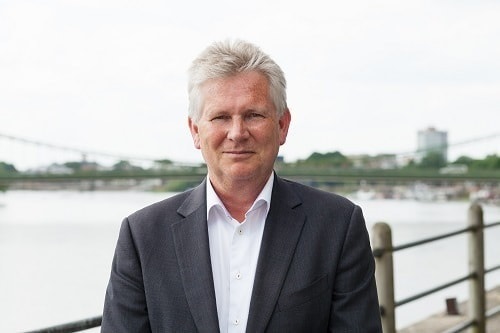
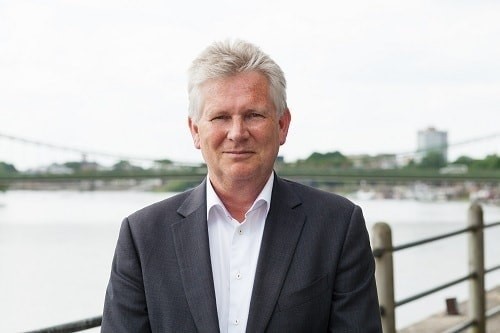 Mike Robinson: "Education remains our most powerful tool."
In a rapidly changing world, shaped by social, economic, technological and environmental challenges, education is the key to keeping the workers of today and tomorrow safe.
Yet, to many around the world, health and safety are about no more than procedural compliance. In reality, they’re both about protecting people. By educating workers about workplace risks, we seek to change mindsets, embed shared values, and empower individuals with the knowledge and confidence they need to act. In turn, this creates an approach to safety where all can play their part in making workplaces safer and healthier. When we get it right, more people get to go home safely at the end of the working day.
In the UK, we see the importance of education not just through the tens of thousands of people who receive formal training, certification and accreditation, but through charitable campaigns that provide knowledge, resources and best practice, like our workplace wellbeing campaign Keep Thriving.
The changing nature of work, technological advancement, and the rise of the gig economy have changed the relationship between employers and employees, leaving too many without the basic health and safety skills they need to remain safe in an ever-changing world.
In the UK, economic pressures since 2010 have seen a reduction of £43 million to the HSE’s core funding, meaning there’s less capacity to raise awareness of the issues that matter. We know that the UK’s OSH regime is, in no small part, successful because it has a regulator to enforce legislation and regulation. But education and awareness are the informal tools of the regulator, providing knowledge, clarifying duties, and empowering thousands of employers and employees to spot and manage risks more effectively. A reduction in funding is a step away from a world in which no worker is injured or dies through their work.
That’s why, as part of our Health, Safety and Wellbeing Manifesto, we called on the Government to provide the resources our regulator needs to keep workers safe, especially amid the rapid change that is coming to define our age.
Overseas, global economic and environmental pressures are forcing workers to relocate, presenting new challenges for state and regulatory authorities. In 2024, we began a partnership with Indian charity, Work Fair and Free (the focus of this month’s India feature), to support their mission to provide health and safety education to migrant and itinerant workers, knowing that education is the foundation of a safer future for all.
As we navigate an era of unprecedented change – from AI reshaping industries to climate change forcing new patterns of work, a perennial truth remains; that informed workers are safer workers. If we believe that every worker deserves to return home safely, then education remains our most powerful tool to make that aspiration a global reality. In a world where 2.4 billion people still lack basic workplace safety knowledge, the choice before us is not whether we can afford to invest in comprehensive health and safety education, but whether we can afford the human cost of society’s inaction.
Mike Robinson FCA is Chief executive of the British Safety Council
OPINION

Rethinking homes as centres of economic activity (amongst other things)
By Andy Lake, Flexibility.co.uk on 08 October 2026
The decentralisation of work away from fixed workplaces, the rise of AI and demographic changes are creating new opportunities for people to carry out ‘hands-on’ work in the home, such as production of fashion, textiles, food and drink, and delivery of health services and therapies. However, our existing housing stock is not designed to accommodate such functions, so it’s essential that future town planning creates homes that support different kinds of enterprise, both to support business success and the wellbeing of these new home-based workers.
Learning that saves lives
By Mike Robinson, chief executive, British Safety Council on 11 September 2026
Success can sometimes be a problem. The better we become at preventing incidents, the harder it can be to see what is actually preventing them.

Migraine in work: a test of the Government’s plans to Keep Britain Working
By Rob Music, The Migraine Trust on 07 September 2026
Migraine can have a profound, and often avoidable, impact on people’s working lives and careers. The Government’s growing focus on workplace health offers an important opportunity to change this, but only if this common, often disabling and frequently invisible neurological condition is properly understood and addressed by Government, the NHS and employers.