
Creating a neuroinclusive workplace brings many benefits, including making neurodivergent employees more comfortable about seeking help and support from managers and colleagues, and there are some simple ways of getting started with the process.
Features
Neurodiversity at work: getting started on creating a supportive environment for neurodivergent workers
By
on 03 December 2025
One of the frequent questions I hear from leaders in organisations when talking about wellbeing at work is “how do we accommodate our employee’s diverse needs?” Straight forwardly, you might imagine in many settings.
One psychology concept which explores the essential elements of a fulfilling life is the PERMA model, which was developed by Martin Seligman. In contrast to the well-known Abraham Maslow’s hierarchy of needs, it does not focus on the needs for a fulfilling life being in a particular order. Seligman outlined five key elements:
Positive emotions, such as the feeling of joy, love and pride.
Engagement, being fully absorbed in something that interests you.
Relationships, fostering emotional security with meaningful connections
with others bringing a sense of belonging.
Meaning, having a purpose, and belonging – for example a fulfilling career, family, religion or being part of something.
Accomplishment, being happy in yourself and your achievements, growing personally and professionally.
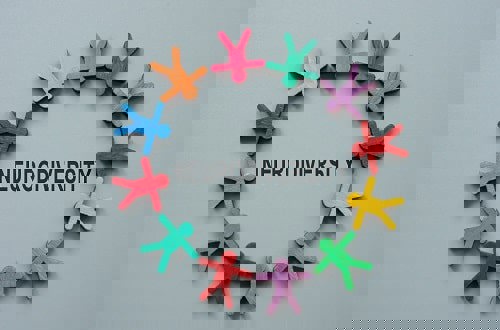 Image: iStock
While these needs may be straightforward for individuals with a neurotypical brain, it is important to recognise that for those with neurodivergence, these basic needs can look quite different. Understanding this is key to creating a truly inclusive workplace. I am going to explore this topic and look at how you can best support a friend/colleague in the workplace, defeat the stigma and celebrate neurodivergence.
What is neurodivergence?
Just like the physical attributes of people who are all different, neurodivergence (ND) refers to the variation in how an individual’s brain processes information compared to what is typically labelled ‘neurotypical’. Common types of neurodivergence include dyslexia, dyspraxia, autism spectrum disorder (ASD), and attention deficit hyperactivity disorder (ADHD). This list is not exhaustive, as there are other conditions within this spectrum.
Society can be fast paced, and unfortunately social stigma can become an issue which often has a knock-on effect, causing the ND person to stigmatise themselves. The stigma can lead to misunderstandings, making it harder for people to thrive in the workplace. Misconceptions about ND individuals’ abilities or challenges often stem from a lack of awareness or exposure. This can result in individuals feeling isolated or reluctant to disclose their ND.
The truth is, we should celebrate our differences – ND conditions are not an indicator of intelligence, nor are they a ‘mental health condition’, and indeed many very well-known and respected figures are known to have ND conditions such as one famous scientist widely referred to as a ‘genius’. I am referring, of course, to the late Albert Einstein who, although ND, was less well understood during his lifetime, and experts have since concluded that he was dyslexic, autistic and had ADHD.
Businessman Richard Branson has spoken openly how dyslexia affected him from an early age; and more recently the actor Emma Watson has been open about her ADHD diagnosis.
Neurodivergent people are known to often have unique skills in problem solving and innovative approaches to tasks and by leveraging those strengths rather than forcing conformity, we can cultivate a psychologically safe environment where ND people can thrive.
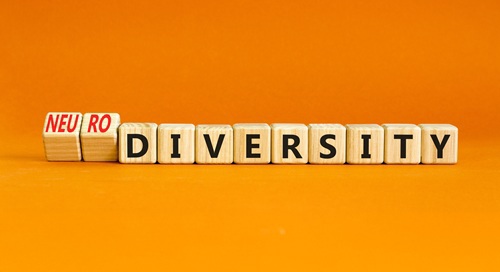 Image: iStock
Common neurodivergent conditions
Let us take a closer look at some common neurodivergent (ND) conditions:
Dyslexia – this is a condition often associated with difficulties in processing written information, particularly when reading, writing and interpreting text. Those with dyslexia may require additional time to process and absorb information. In some cases, factors such as the colour of the paper or the font used can impact how easily the information is understood.
Dyspraxia – primarily affects motor skills and coordination, making tasks involving movement and physical coordination more challenging. Those with dyspraxia may struggle with activities like writing, balancing or organising their movements.
Autism spectrum disorder (ASD) – this is developmental condition and affects the person’s perception of the world around them. There is a wide spectrum of this condition (hence the name), and while there may be similarities, two different people with ASD will have their own individual needs.
Typically, the most prevalent difficulties can be with communication and understanding what is being said, and importantly not said – non-verbal communications such as gestures, body language and facial expressions, for example. Social interactions can be difficult for someone with ASD as they may struggle with eye contact and common social cues including emotional awareness.
Someone with ASD often will demonstrate a need for routine and exhibit repetitive actions such as sensory seeking behaviour like certain smells. For example, they may be sensitive to the feel of the material covering their chair at work or the sound the chair makes when it moves, or they may prefer certain coloured objects. As mentioned, there are no two people with the same needs and this is why it is essential we take time to understand individual needs.
Attention deficit and hyperactivity disorder (ADHD) – this condition tends to be prevalent from an early age, and those with ADHD might struggle to concentrate on something and may seem restless and/or impulsive. Someone with ADHD may appear ‘disorganised’ but that is not always the case, and those with ADHD can also become fixated on a task with meticulous precision.
This list is by no means exhaustive and, of course, everyone is different.
Supporting neurodivergent colleagues – tips for managers and workers
- Educate yourself and your team on neurodivergence. You have already taken the first step by reading this article! There are free resources and awareness courses available to help deepen your understanding. Ensuring a supportive and inclusive culture is essential.
- Be mindful of your communication style – remember eye contact can be a problem for some ND people, and loud or overly direct tones can be easily misinterpreted as confrontational. Give a suitable means for the person to feedback on how their needs can be supported.
- Those with ND’s may struggle to take on board information, and this could include instructions and training at work. Taking time to support a colleague by explaining in a way that can be understood can make all the difference. Allowing extra time and being patient is essential.
Reasonable adjustments
Employers, leaders and managers may need to think about reasonable adjustments for neurodivergent employees, such as flexibility in hours and/or hybrid working arrangements. Other reasonable adjustments to support ND people to enter, remain in and thrive at work might include:
- Providing a low stimulation workspace or one with fewer sensory triggers needs consideration, such as adjustable lighting. A quieter workspace where possible too – if not, perhaps noise-cancelling headphones could be an option?
- A suitable system for communicating instructions – for example, many neurodivergent people prefer written instructions so a diary or notebook can help, or utilising technology with a number of useful mobile applications available nowadays.
- Think about emergency procedures – are there any adjustments needed?
- Remember – as with any employee – we should recognise the strengths and unique input a ND person may contribute and encourage them to use their ability.
- For both neurodivergent and neurotypical employees, focus on the quality of the work produced (outputs) rather than the number of hours spent or the specific methods used to achieve it (inputs).
- While having a ND is not a ‘mental health condition’ in itself, those with ND’s may still experience poor mental health for a variety of other reasons, including stress at work. As a result, be aware of the possibility of people with ND’s experiencing poor mental health when assessing the risk of occupational stress. If feasible, the employer should offer access to an employee assistance programme that can support people with ND’s (and others) who may be experiencing work-related stress and poor mental health, or at least provide information and signposting to sources of further help and support.
- Employers and managers should have an open (but confidential) conversation with the neurodivergent employee – they are best placed to tell you what works for them and what doesn’t.
Andy Hooke CMIOSH is a chartered health and safety consultant. Connect with him at: linkedin.com/in/andy-hooke-cmiosh-tifsm-b7b247158/

FEATURES
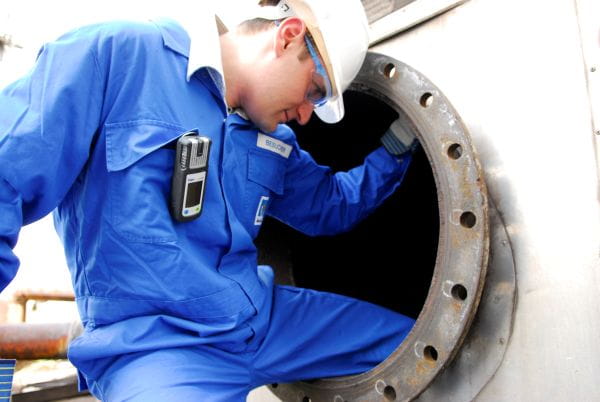
Confined spaces: why training is key to keeping workers safe
By Adam Barker, Draeger Safety UK on 22 September 2026
Suitable training plays an essential role in preventing fatalities and dangerous situations during work in confined, hazardous spaces like tanks, silos and sewers, but it’s essential that any course selected genuinely reflects the specific tasks, hazards and risks workers will be faced with.
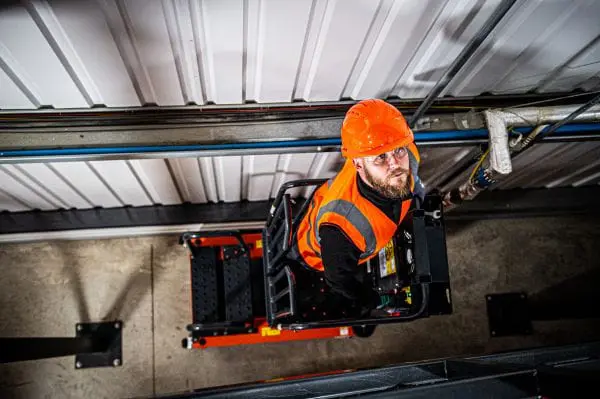
Why the future of low-level access starts with rethinking old habits
By Samuel Butterworth, JLG Power Towers on 22 September 2026
Low-level access equipment like powered lifts can help make work at height safer by providing a secure, enclosed working platform, but they can also bring other benefits, such as avoiding the need for awkward stretching to reach work areas, which helps to prevent musculoskeletal injuries.
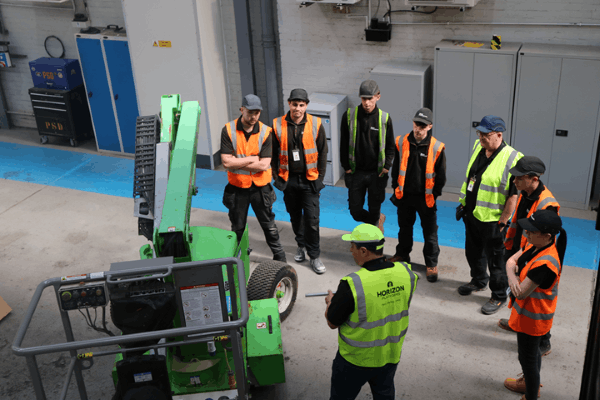
Why paperwork alone isn’t sufficient MEWP rescue preparation
By Ben Hughes, Horizon Platforms on 22 September 2026
A recent safety awareness day has highlighted the importance of contractors regularly practising emergency rescue from mobile elevating work platforms, rather than relying on one-off training sessions and paper procedures that are not always easy to follow during a fast-moving incident.