
Virtual College by Netex speaks to Liz Longman, health and safety chartered professional and director of Terra Firma 360, to uncover how health and safety in the construction sector is advancing and hear about five key trends safety professionals should have on their radar.
Features
How is safety in the construction sector advancing? Trends to watch
By
on 20 May 2025
Health and safety in the construction industry is evolving rapidly. With technological developments, new regulatory requirements and increased accountability placed on safety leaders in this space, how should health and safety professionals in the construction sector keep up?
And, with high-profile events such as Grenfell Tower exposing the consequences of safety failures and increasing the need for regulation, more emphasis is being placed on safety leadership in this sector.
Liz, why is safety in construction so important?
Liz Longman: “Construction encompasses various work activities, from building new structures to refurbishing smaller premises and performing various maintenance tasks. It remains one of the industries with the highest number of reportable accidents and is a key area of concern for businesses, employees, and enforcement authorities.
“In 2023/2024, 51 construction accidents resulted in fatalities. The top causes were as follows:
- Falls from height (52 per cent)
- Trapped by something collapsing/overturning (11 per cent)
- Struck by moving flying/falling objects (11 per cent)
- Struck by moving vehicle (10 per cent)
- Contact with electricity or electrical discharge (five per cent).
 In 2023/2024, 51 construction accidents resulted in fatalities. Photograph: iStock
“Contributing factors are varied and often interact with one another to result in an incident. To prevent a serious accident, it is beneficial to engage a competent person to assist with planning, equipment maintenance, risk assessments and worker training.
“However, it’s not just accidents that cause harm to people. There is now a stronger focus on preventing occupational diseases caused by risks such as exposure to hazardous substances, manual handling, hearing loss and vibration white finger.
“Health issues evolve more slowly than accidents; their effects may not be immediately apparent and often may not be prioritised because the risks involved are hard to identify. In such cases, it is important to ensure that your team is competent in recognising these risks and managing them effectively.”
What key trends are shaping health and safety in the construction sector?
Increased SSIP applications
“Since the launch in summer 2024 of the UK Government’s ‘Plan to Get Britain Building Again’ housebuilding programme, there has been a surge in construction projects available for tender. For most contractors, this means they must demonstrate safe working practices, and often, the Principal Contractor nominates an SSIP (Safety Schemes in Procurement) platform with which a contractor must register.
“SSIP applications involve substantial evidence and require input from the contractor applicant, including policies, risk assessments, communication techniques and a significant section on training. The contractor must also provide proof of how they assess, plan, and facilitate training, utilising training matrices, risk assessments and certificates for their team.”
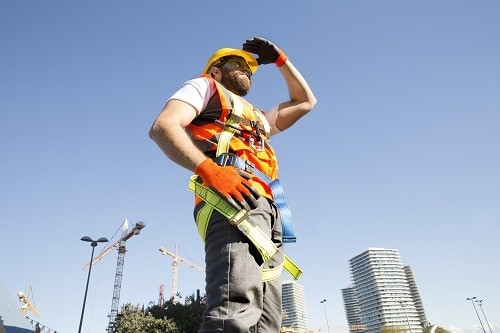 Mental health awareness training has become a standard requirement for site managers. Photograph: iStock
Mental health and wellbeing management
“In a post-pandemic sector, safety has expanded into the realm of health and mental wellbeing, and today’s safety leaders must consider this as a strand of the safety function for construction teams.
“Now, in 2025, much of the UK construction sector has made significant strides in prioritising mental wellbeing, recognising its importance alongside physical safety.
“Employers are increasingly adopting proactive strategies, such as on-site mental health first aiders, anonymous counselling services and tailored digital wellness platforms to address the unique challenges of construction work.
“Mental health awareness training has become a standard requirement for site managers, fostering supportive leadership and eradicating stigma.
“There are numerous schemes focused on workplace mental health and it is worthwhile
for companies to evaluate how they support their employees’ mental wellbeing, especially considering the high prevalence of mental illness and its implications within the industry.
“Through these efforts, mental wellbeing is increasingly integrated into the construction culture, resulting in healthier and more resilient teams.”
Increased off-site construction
“Recent advancements in modular construction techniques have significantly expanded the opportunities for off-site building processes. This shift has led to a notable decrease in on-site workers at any given time.
“As a result, these developments create a safer and more organised work environment by allowing various trades to perform their tasks more effectively and securely in their own workspaces specifically designed to manage the health and safety risks that their work presents.
“It also reduces the risks from other construction workers, vehicles and machinery operating around them.”
 Liz Longman: "Health and safety in the construction industry is evolving rapidly."
Wearable technology for workplace safety
“Wearable technology is quickly transforming workplace safety, and 2025 is set to bring even more innovations. These smart devices – such as wristbands, helmets and smart clothing – monitor workers in real time, aiding in accident prevention and ensuring adherence to safety regulations.
“Some examples include:
- Hazard proximity alerts: smart wristbands can recognise when workers are too near to dangers, heavy machinery, or one another, minimising risks associated with collisions or inadequate distancing.
- Heat stress monitoring: wearable devices that track body temperature, heart rate and environmental conditions can issue warnings when workers face the risk of heat-related illnesses, aiding in the fight against the impacts of increasing global temperatures.
- Safety for falls and isolated workers: sophisticated sensors in wearables can detect slips, trips and falls, activating automatic alerts for quicker emergency responses.”
So, how can workers and others reduce accidents in the workplace? What key takeaways should safety managers take note of?
“I would stress the importance of reflecting on the below questions to help construction employers to get safety on track and stay compliant with health and safety legislation.
- Are you managing the risks from accidents and health issues? Could an inspection or audit help to identify what you need to do to manage them?
- Would the support of a competent health and safety person for your business help you take a step back and look at the risk in a more effective way?
- How can you promote mental health and wellbeing throughout your organisation?
Can you plan your work better so that you spend less time on-site and construct components off-site – resulting in a more suitable work environment with less risk from other work activities? - Can wearables assist health and safety management to monitor health and safety performance and assist workers to avoid accidents and ill health?”
For advice and resources on staying compliant with health and safety, visit the resource hub at Virtual College by Netex:
virtual-college.co.uk/resources
T. +44 (0)1943 885085
Follow Virtual College by Netex:
linkedin.com/company/virtual-college-ltd
@virtual_college
Liz Longman is director and chartered health and safety professional at Terra Firma 360.
FEATURES

Who is the wolf in your life? Listening to the people behind the hard hat
By Inna Cebotari, Kinth Square on 02 October 2026
A new play explores the lives of migrant construction workers in the UK, using humour, real-life experiences and physical theatre to capture the banter, friendships and absurd moments that make life on site bearable, alongside the pressures that often go unseen. Ahead of the play’s premiere in London on 12-14 November, playwright Inna Cebotari explains how Three Little Pigs aims to add to the public debate about how best to support the wellbeing of construction workers.
Eliminating barriers in reporting: how conversational AI can unlock safety engagement
By Julian Taylor, ecoPortal on 04 October 2026
Online reporting systems that require lengthy and cumbersome form filling and typing can discourage workers from reporting safety incidents and concerns. However, AI-powered mobile apps that allow reporting simply by speaking can simplify and speed up the process, boosting reporting rates and overall staff engagement with safety systems and culture.

Why UK employers need to rethink recruitment, retention and support for older workers
By Orchie Bandyopadhyay on 04 October 2026
With workers over the age of 50 now comprising almost one third of the entire UK workforce, recruiting and retaining older workers is now core to the success of the economy. However, not all employers are offering what’s needed to retain and recruit older workers, and ageist attitudes, limited flexible working opportunities, and employment support that doesn’t fit with health, caring, or other responsibilities are leaving too many people locked out of the labour market.