
A YouGov survey commissioned by British Safety Council among 4018 UK employers and employees, and published today (16 July 2024), reveals that both employers and employees are optimistic about the impact new technologies, such as artificial intelligence (AI), augmented reality (AR) and virtual reality (VR) will have on their workplace – even though decision makers feel more optimistic than staff.
Uncategorized
Employers and staff optimistic about impact of new technologies, despite uncertainty about safety – new British Safety Council survey
By
on 15 July 2024
When asked about AI, 63% of 2006 employers said they are optimistic about the impact that this new technology will have on their workforce, compared with 41% of 2012 employees, when asked about its impact on their workplace.
However, just over a quarter (26%) of both employers and employees said that AI would make their workplace ‘less safe’. This compared with the same number of employers (26%) who thought it would make it ‘more safe’ and just 13% of employees.
When asked how likely or unlikely they think it is that their job will be replaced or superseded by AI in the next 10 years, 68% of employees thought it unlikely and just 23% said it was likely. Among the employers, 20% thought less than 10% of their workforce would be replaced by 2034, while 6% of employers did think that over 50% of their workforce could go.
Levels of optimism about the impact of AR and VR were somewhat lower, with 48% and 51% respectively of employers expressing optimism about the impact of both technologies, and just 33% and 31% of employees. Both employers and employees were also more equivocal about how far these would impact people’s safety in the workplace, with around half seeing ‘no change’.
Peter McGettrick, Chairman of British Safety Council, said: “We commissioned this survey with YouGov to coincide with the 50th Anniversary of the Health and Safety at Work Act and consider what lies ahead for health, safety and wellbeing in the coming half century. The findings show there is clearly more to be done to ensure that both employers and employees not just reap the benefits but are also given reassurance and support on some of the risks.
“While no one can predict the future entirely, change is inevitable. This is why we’re calling on the Government to incentivise companies who invest in new and developing technologies – like AR, VR, and AI – for the purposes of improving workplace health, safety and wellbeing. Alongside this, we want to see more support for training to keep people safe, healthy and well in work.
“Our founder, James Tye, was instrumental in agitating the government of the time to set up a royal commission, which ultimately led to the Robens Report that led to the Health and Safety at Work Act. If you fast-forward 50 years, in recent years we’ve been calling for wellbeing to be at the heart of health and safety. Recently, we’ve called on Sir Keir Starmer in his new Government to put a Minister for Wellbeing in the Cabinet.”
“A summary of the YouGov survey findings can be found here. British Safety Council’s Health, Safety and Wellbeing manifesto can be downloaded here.
Roundtable discussion on the Future of Work
The survey findings come on the back of a roundtable discussion about the Future of Work, hosted by British Safety Council on Monday 8 July and chaired by Nathan Baker, CEO of the Institute of Occupational Medicine. A short video of this event can be seen here.
Baker steered an in-depth discussion with six workplace health and safety experts from training, legal, technology, auditing and trade union backgrounds. These were David Sharp, Founder and MD of International Workplace, Dee Arp, Chief Operating Officer of NEBOSH, Sean Elson, Partner at Pinsent Masons, Janet Newsham, Chair of the Hazards Campaign at Greater Manchester Hazards Centre, Peter McGettrick, Chairman of British Safety Council, and Phil Pinnington, Head of Audit & Consultancy at British Safety Council.
Setting out the context of the legacy of the Health and Safety at Work Act, Nathan Baker said: “If you look at where we were, in 1974, against where we now are, the world is a safer place. From 1974 to 2015, fatalities in the workplace fell by 85 per cent, a huge drop. Non-fatal injuries are down by 77 per cent in the same period. However, asbestos deaths are up tenfold, and we still lose 35 million days a year due to ill health and injury, costing the economy £20.7 billion.”
Dee Arp said the Health and Safety at Work Act had provided a “great framework” but there is still a great deal to do. “I always think whenever we mention statistics that for every one of those numbers, there’s a person, there’s a family and there are friends,” said Dee. “In addition to that, there are all the mental health issues that we know are not significantly reported.”
Janet Newsham said: “The Health and Safety at Work Act is fantastic and it’s done some really good things, but there are still more than 50,000 people dying each year because of work-related exposures to hazardous and toxic substances, and the ever-increasing mental health crisis that we’ve got. We don’t know the true numbers of people who die from work-related suicide but, as an estimate, we say it’s probably 10 per cent of suicides in the country. It’s never reported – it’s not reportable – and it’s not investigated, so there’s a long way to go to keep people safe.”
New and emerging issues
Reflecting on a “realignment of health and safety away from safety, safety, safety”, and a move towards health, Phil Pinnington said: “That’s continuing with wellbeing, mental health, stress management and I think things are moving in multiple directions, in a way that those who wrote the 1974 Act would never have thought about when they wrote it.”
From a legal perspective, Sean Elson said that there has been a significant rise in recent years in the amount of work his law firm has taken on in relation to mental and occupational health issues. “Something we’re now doing regularly, that 10 years ago was unthinkable, is we’ve been instructed by a number of academic institutions and inquests in relation to student deaths by suicide, and that’s a very hot topic in that particular sector. At the same time, people are then asking…from an employment point of view…’what about the staff?’”
Turning to the impact of new and emerging technologies, like AI, David Sharp said: “The risks now are different from the risks 20, 30 or 50 years ago. From my point of view, there’s a lack of awareness of the implications of where we are. I personally think we’ll probably look back in 10 years’ time on this moment and think we all went a little bit crazy, and that we were all trying to do too much, and we lost focus on the people at the expense of the technological solution.”
Dee Arp said: “In this fast-moving space, it goes right back to the people. How is AI helping people and what do we need to give people to help them embrace these huge, unprecedented changes? AI hasn’t got empathy, and it hasn’t got a conscience.”
OPINION
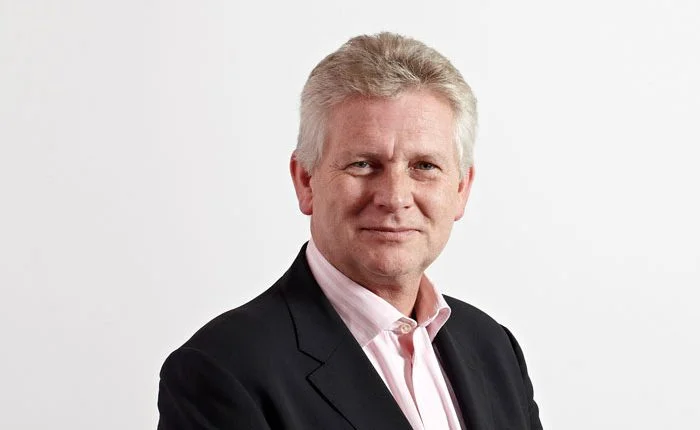
Building a future worth working in
By Mike Robinson FCA, British Safety Council CEO on 12 October 2026
It’s easy to become myopic about the future of work. Take a quick look at the world today and the signs can seem discouraging: political instability, economic volatility, the accelerating disruption posed by AI and climate change. Together, these factors paint a picture of uncertainty that can make our belief in progress seem naïve and tempt us into believing that the future can be no better than the past, that our best days are now behind us. That would be a profound failure of imagination.

Who is the wolf in your life? Listening to the people behind the hard hat
By Inna Cebotari, Kinth Square on 02 October 2026
A new play explores the lives of migrant construction workers in the UK, using humour, real-life experiences and physical theatre to capture the banter, friendships and absurd moments that make life on site bearable, alongside the pressures that often go unseen. Ahead of the play’s premiere in London on 12-14 November, playwright Inna Cebotari explains how Three Little Pigs aims to add to the public debate about how best to support the wellbeing of construction workers.
Eliminating barriers in reporting: how conversational AI can unlock safety engagement
By Julian Taylor, ecoPortal on 04 October 2026
Online reporting systems that require lengthy and cumbersome form filling and typing can discourage workers from reporting safety incidents and concerns. However, AI-powered mobile apps that allow reporting simply by speaking can simplify and speed up the process, boosting reporting rates and overall staff engagement with safety systems and culture.