
The UK has been a global leader when it comes to many social and environmental protections.
Opinion
Stop the deregulation drive: sensible health, safety and environmental protections are a force for good
By
on 16 July 2023
The 1974 Health and Safety at Work Act, for example, is widely accepted as a landmark piece of social legislation which greatly influenced EU health and safety law and established the Health and Safety Executive (HSE) – a world-class organisation which has helped the UK to achieve an internationally outstanding level of health and safety performance.
Meanwhile, the government has set out strong ambitions with respect to net zero and the environment, with the 2021 Environment Act setting out a robust (albeit not perfect) new framework for environmental protection.
 Emma Rose: "It is time to move away from crude deregulation, and towards a more balanced, sophisticated debate."
But alongside these (and many other) steps forward, for many years there has been a prevalence of arguments that regulation is bad for Britain. We hear that ‘excessive’ rules hold back investment, stifle productivity and innovation, deter growth and prevent British people from using their ‘common-sense’.
These views have formed the basis of many deregulation drives by successive UK governments, and have underpinned an ongoing commitment to the deregulation project. The latest vehicle for reducing and removing regulation is through the Retained EU Law (Revocation and Reform) Bill (REUL). This Bill, which is due to move to ‘ping pong’ stage in the coming weeks, has invited much criticism from civil society organisations, as well as from politicians across parties. As a result, Secretary of State for Business and Trade, Kemi Badenoch, recently proposed to reduce the number of EU-derived laws for review, and to scrap the ‘controversial’ sunset clause.
‘Dangerous weakening’ of public protections
While this move is welcome, Unchecked UK, alongside the 70-plus UK organisations that form our network, remain concerned about the threat that this Bill continues to pose to many key protections. The Bill will still give sweeping powers to ministers to cherry pick and change important regulatory safeguards in the future, or to replace them with voluntary measures with virtually no scrutiny.
And the removal or revocation of 600 laws – many of which cover environmental, consumer or employment laws – still represents a dangerous weakening of public protections. They include the ‘six-pack’ health and safety regulations, which cover a huge variety of protections for workers, as well as other health and safety laws, such as the Control of Asbestos Regulations 2012.
This approach to regulation flies in the face of the significant body of evidence which demonstrates the myriad benefits provided by strong, well-enforced health and safety and environmental laws; from driving huge improvements in injury prevention, to cleaning up our air quality.
Strong protections can help to drive up standards in local communities, offer security for the more vulnerable members of society, and, at a time when people’s incomes are being squeezed, provide a guarantee that basic quality and safety standards are being met. What’s more, our research finds that well-designed regulations can boost growth and innovation, drive productivity, and improve outcomes for consumers and workers.
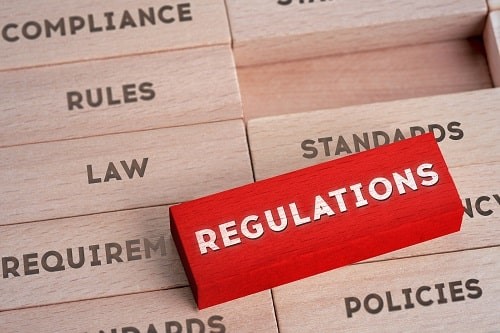 Many hold that divergence from EU regulations would be costly and complex for businesses. Photograph: iStock
Unfortunately, these benefits have not been factored in to policy decisions around regulation over recent years. Successive deregulation policies have resulted in the weakening or removal of key protections.
Meanwhile, enforcement activity has plummeted, while regulatory agencies have suffered huge declines to their budgets and staff. HSE, for example, experienced a 58 per cent real-terms decline in its funding from 2009 to 2019, while Local Authority health and safety inspector numbers fell by 54 per cent in this period.
Unsurprisingly, enforcement activity has fallen steeply, with prosecutions, audits, enforcement notices and proactive health and safety checks declining over the past decade.
No mandate for deregulation
Our public opinion polling shows that efforts to remove regulations or to scale back on their enforcement are wildly out-of-step with the views of British people and businesses. Our research shows that most people – no matter their age, where they live, or how they vote – strongly support robust social and environmental protections, and would like to see them maintained and strengthened.
British businesses also have a very different story to tell about regulation. Contrary to the commonly held view that regulation is manifestly bad for businesses, a recent poll carried out by YouGov for Unchecked UK, RSPB, the Wildlife Trusts, Royal Society for the Prevention of Accidents and Women’s Institutes finds that fewer than a fifth of UK businesses see excessive government regulation as the most important domestic issue facing them.
Four in five (79 per cent) of UK businesses say that they are not willing to accept lower health and safety standards for their employees and customers. What’s more, the survey finds that two-thirds of businesses think the REUL Bill will cause more uncertainty for UK businesses and limit economic growth.
These views are echoed in our recent essay collection, written by UK businesses, which explores how sensible, well-designed regulations can (and do) deliver real benefits to the UK economy, as well as bringing about the broader social and environmental outcomes that British people demand.
Contributors point out that, at a time when businesses are facing many other challenges from the current economic climate, deregulation is far from a business priority. Indeed, many hold that divergence from EU regulations would be costly and complex for businesses. Others flag that moving away from aligned standards and regulations will restrict market access and damage the confidence of businesses to invest and grow.
A balanced approach
It is time to move away from crude deregulation, and towards a more balanced, sophisticated debate around the value of sensible regulations – one which recognises well-designed regulations as a force for good, and which acknowledges the crucial role they have played in creating the society we know today. Rather than a narrow focus on removing regulation from the UK statute book, the government should be focusing on optimising and strengthening the safeguards that protect people and the environment, and which have the potential to establish the UK as a world-leader when it comes to standards and innovation.
Not only would this approach be more in step with the public and business mandate, we believe it is, quite simply, the right thing to do.
British people – regardless of their politics – want to leave generations to come with a flourishing natural environment, thriving local communities, a world-class food system, and safe and fair workplaces. UK businesses want to operate in favourable conditions which allow them to plan, innovate and invest with confidence. Strong, well-enforced regulations are a way of delivering on both these imperatives.
For more information on the work of Unchecked UK see:
unchecked.uk
E. [email protected]
Emma Rose is co-director & co-founder of Unchecked UK

OPINION

Learning that saves lives
By Mike Robinson, chief executive, British Safety Council on 11 September 2026
Success can sometimes be a problem. The better we become at preventing incidents, the harder it can be to see what is actually preventing them.

Migraine in work: a test of the Government’s plans to Keep Britain Working
By Rob Music, The Migraine Trust on 07 September 2026
Migraine can have a profound, and often avoidable, impact on people’s working lives and careers. The Government’s growing focus on workplace health offers an important opportunity to change this, but only if this common, often disabling and frequently invisible neurological condition is properly understood and addressed by Government, the NHS and employers.

Noise risk and multi-track enforcement: what EHS managers need to know
By Emma Tattersdill, Bexley Beaumont law firm on 17 August 2026
Noise nuisance from an industrial or commercial site can result in costly and time-consuming legal action from regulators and neighbours, but there are practical ways of ensuring noise levels do not exceed acceptable limits and trigger complaints from nearby businesses and residents.