

Mining investors have heightened their awareness of ‘tailings’, or waste from mining operations, and are increasingly looking for and demanding improved ESG performance from the mining companies they invest financial funds in.
Features
ESG reporting: how software can help
By
on 09 June 2022
The concept of ESG (environmental, social and governance) is not new. In the 2010s, the pressure for companies to disclose their sustainability performance was seen as a branding exercise, and the pressure to report came primarily from boutique impact investors, niche ESG experts and non-governmental organisations.
However, the recent surge in social injustice cases, climate-related risks and economic and public health crises have intensified the focus on ESG in boardrooms and across all sectors, including the global mining industry. ESG is now linked to longer-term performance, and some also argue that it provides opportunities for cost savings, revenue generation and risk mitigation. Stock exchanges, financial regulators, lenders and asset managers are making it part of how they invest.
Impact of ESG on the mining Industry
Mining by nature has the potential to release hazardous elements and other toxic fluids into the air, water or soil, and these emissions can be devastating to human lives, the environment and the credit rating of a company, according to mining market intelligence firm S&P Global.
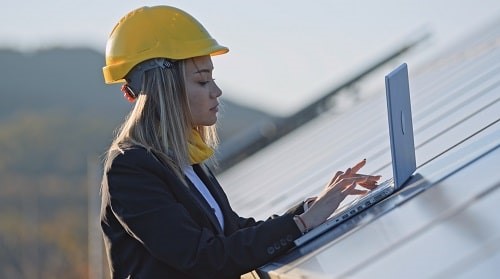 Firms may need to consider using integrated digital technologies to support the real-time recording, analysis, reporting and visibility of their ESG data. Photograph: iStock
Investors have heightened their awareness of ‘tailings’, or waste from mining operations, and are increasingly looking for and demanding improved ESG performance from the mining companies they invest financial funds in.
ESG investing is becoming the norm, so, if a business like a mining company is not aggressively putting a strong framework in place to track their ESG risks and improve their ESG performance, they’re most likely already starting to lose traction with (and the interest of) investors. If a mining company decides not to take ESG and sustainability seriously, they will find it impossible to get funding, insurance, or even a license to operate.
In fact, obtaining licenses to operate from local regulators and communities has been challenging for the mining industry in many countries. Therefore, in order to get permission to launch successful new mining projects, it is likely that mining companies will have to create real benefits for the communities near the mine sites. This concern recently surfaced in EY’s global mining survey, when a significant number of mining executives ranked ESG, decarbonisation and licensing to operate as the top three risk factors facing their business in 2022.
For many large businesses, disclosing and reporting on their ESG risks, initiatives and performance may soon become mandatory. In the European Union for example, we’re already witnessing an array of disclosure initiatives, such as the Sustainable Finance Disclosure Regulation (SFDR) and the Non-Financial Reporting Directive (NFRD). Under these, certain large companies are required to disclose an array of new ESG data. This is a signal that the regulatory floodgates around ESG are about to open, and it’s also driving companies to integrate ESG considerations into their disclosure processes.
Now that ESG disclosures are on the road to becoming mandatory for many large businesses, the question now is how should environment, health and safety (EHS) professionals prepare to track and demonstrate their organisation’s genuine commitment to ESG while avoiding any accusations of greenwashing?
In our recent global survey of 350 business leaders about the state of ESG reporting, 80 per cent said ESG and sustainability form part of the responsibilities of the company’s EHS department. EHS teams, especially those in mining industries where EHS processes are more mature, have experience managing ESG-related issues around the environment, worker health and safety and greenhouse gas emissions.
EHS practitioners in mining companies are experienced in dealing with questions such as:
- How can the business reduce water and energy waste?
- How harmful are air emissions from the company’s operations?
- What’s the carbon footprint of the company?
- Are waste management programmes working efficiently and properly disposing of hazardous waste?
- Is the supply chain optimised for sustainability?
The EHS team monitors these considerations, ensuring the business complies with all applicable regulations. They are also responsible for developing plans to ensure the organisation remains ahead of forthcoming and likely new regulations in these areas.
However, more importantly, the EHS team will most likely have the data that stakeholders and investors want to see for ESG reporting and compliance.
It’s also important to remember that companies are coming under increasing regulatory and market pressure to improve the quality of their ESG disclosures. In turn, this means that organisations need to gather, and have access to, better quality ESG data.
 Christine Adeline: "For many large businesses, disclosing and reporting on their ESG risks, initiatives and performance may soon become mandatory."
In our ESG reporting survey, we asked business leaders what is preventing their companies from initiating ESG reporting, and 45 per cent cited a lack of data. With a really good ESG information framework, companies can better demonstrate their genuine commitment to ESG.
However, any attempt to greenwash the company’s ESG performance will be a huge obstacle and a missed opportunity for companies that are trying to make big changes in how they manage ESG areas like environmental and social matters, the treatment of employees and respect for human rights.
Digital technologies
The growing focus on ESG will continue to put pressure on companies to have better information systems to support transparent disclosures of their social and environmental impacts – and how successfully they are managing these impacts.
As a result, there’s an urgent need for companies to consider using integrated digital technologies to support the real-time recording, analysis, reporting and visibility of their ESG data. This includes having suitable electronic dashboard tools so sufficient good quality data is available to inform decisions about why, where and how to allocate additional time and resources to managing ESG risks – and for public reporting on the company’s ESG approaches, performance, challenges and successes.
Clearly, using a variety of different recording, reporting and management systems and labour-intensive Microsoft Excel files will not provide the level and quality of ESG data required. Simply trying to use paper-based recording systems and checklists, and Excel files, means extra time and resources will have to allocated to analyse, plan and report on the company’s ESG challenges and performance.
In contrast, a centralised enterprise software system makes it much easier to record, track, analyse and report on the company’s ESG challenges, goals and achievements.
In fact, companies are increasingly investing in digital tools, like software systems, to help them effectively plan, analyse and transparently report on issues facing the business, such as ESG, sustainability, health and safety and the transition to net zero goals.
If the current trends continue, the demand for the good governance of ESG issues will continue to intensify – not just for the mining industry but across all sectors. And companies that integrate EHS and sustainability into their business as a whole will be far more successful in their ESG efforts and will most likely attract more potential investment.
Therefore, greater digitalisation will be critical for businesses that need to track, analyse and publicly disclose and report on ESG issues, in order to attract investment and demonstrate to governments, society and consumers that they are properly managing the social and environmental challenges and impacts associated with their business model and day-to-day operations.
SAI360 and Verdantix held a free webinar in June 2022 exploring what ESG means for EHS&S management and how EHS functions can be more strategic and deliver business value. Listen here
For more information see: sai360.com/esg
Christine Adeline is SVP of product management at SAI360

FEATURES

Who is the wolf in your life? Listening to the people behind the hard hat
By Inna Cebotari, Kinth Square on 02 October 2026
A new play explores the lives of migrant construction workers in the UK, using humour, real-life experiences and physical theatre to capture the banter, friendships and absurd moments that make life on site bearable, alongside the pressures that often go unseen. Ahead of the play’s premiere in London on 12-14 November, playwright Inna Cebotari explains how Three Little Pigs aims to add to the public debate about how best to support the wellbeing of construction workers.

Eliminating barriers in reporting: how conversational AI can unlock safety engagement
By Julian Taylor, ecoPortal on 04 October 2026
Online reporting systems that require lengthy and cumbersome form filling and typing can discourage workers from reporting safety incidents and concerns. However, AI-powered mobile apps that allow reporting simply by speaking can simplify and speed up the process, boosting reporting rates and overall staff engagement with safety systems and culture.

Why UK employers need to rethink recruitment, retention and support for older workers
By Orchie Bandyopadhyay on 04 October 2026
With workers over the age of 50 now comprising almost one third of the entire UK workforce, recruiting and retaining older workers is now core to the success of the economy. However, not all employers are offering what’s needed to retain and recruit older workers, and ageist attitudes, limited flexible working opportunities, and employment support that doesn’t fit with health, caring, or other responsibilities are leaving too many people locked out of the labour market.