
I think most of us agree that reality is complex. Whether we are trying to understand work, politics or health, the world we live within is a vertiginous mix of ideas and structure, the past and the present and millions of individuals, each with their own idea of how the world should be.
Opinion
Radical simplicity
By
on 01 April 2019
It would be very easy to sit back and accept that the world is far too complex to be either understood or changed for the better. As a charity with a clear public-benefit remit, we can’t be so fatalistic.
One approach to ‘making a difference’ is to court controversy by pushing out deliberatively simple and provocative opinions to get noticed, appeal to your friends and irritate your enemies. This is fine if you consider a ‘Twitter storm’ is anything more profound than a storm in a teacup. It seems unlikely that encouraging self-satisfied devotees is going to really improve the lives of other people.
Campaigning needs a bit of this to get noticed and, whether we like it or not, the media is a crucial vehicle for social change. Yet, there is another approach to simplicity.
This is the simplicity that tries to do justice to complexity but doesn’t want to use it as an excuse to do nothing. Too many times I can see that when confronted by difficult decisions we delay, procrastinate and, in a move we all know from government and Yes Minister, start a review. Perhaps by looking like we are doing something, people will think we are doing something, goes the mantra.
A good example is health and wellbeing. There are serious challenges here. With more of us living longer, and living longer with health conditions, the costs associated with ill health – whether from reduced economic productivity or increased public spending – is likely to increase in the coming years. In the UK alone, the state spends over £12 billion a year on health-related benefits and foregone taxes and employers face a £9 billion bill. Yet, the response to address this issue has not been effective so far.
Presenteeism is a huge drain on our economic competitiveness and our personal happiness. The causes of it and how we can tackle it are complex and need to be considered. But also, at a simple level, people should not be at work if they are unwell. Saying this seems to me to be something that shouldn’t be too controversial.
A clear and simple message along these lines will solicit quite passionate responses that it’s dangerous and too simplistic. Is this fear about business realities, where a certain amount of business transactions are undertaken by people who are unwell? How would that business survive if all these people were at home recovering?
Or is it about power and trust? Should workers have such power to simply decide for themselves if they are sick or not, or the right to request reasonable adjustments in case they have an ongoing health condition? Who gets to decide what is reasonable? Personal ambition is also an important factor, with people striving to get ahead looking upon sickness as a barrier to that goal. Perhaps one of the strongest indicators of a healthy and trusting workplace is an above-average sickness absence record or, in time, a steadily declining one: a workplace with staff who see intervening in their own health, by staying at home or seeking help, as a responsible act in their own interests and those of the business.
That good health is good business is backed up by the evidence. We now need to reframe it, in terms of health economics, that improved health will stabilise or even reduce public spending, as well as improve productivity. As I said, health remains a complex situation, but if we are to get people to start thinking at all about presenteeism and start taking it seriously, then we also need to find a way to say it’s very simple.
We launched the campaign Time to Breathe and Canairy, a free innovative pollution app, in central London last month. Thank you to those who came along to support us in our campaign to better protect the health of staff who work outside.
OPINION
Building a future worth working in
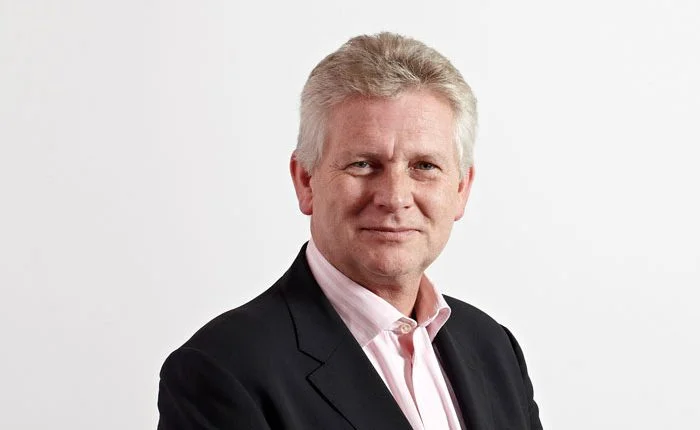
By Mike Robinson FCA, British Safety Council CEO on 12 October 2026
It’s easy to become myopic about the future of work. Take a quick look at the world today and the signs can seem discouraging: political instability, economic volatility, the accelerating disruption posed by AI and climate change. Together, these factors paint a picture of uncertainty that can make our belief in progress seem naïve and tempt us into believing that the future can be no better than the past, that our best days are now behind us. That would be a profound failure of imagination.
Rethinking homes as centres of economic activity (amongst other things)
By Andy Lake, Flexibility.co.uk on 08 October 2026
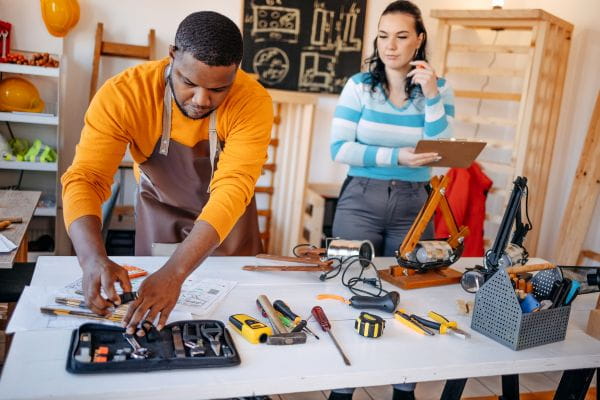
The decentralisation of work away from fixed workplaces, the rise of AI and demographic changes are creating new opportunities for people to carry out ‘hands-on’ work in the home, such as production of fashion, textiles, food and drink, and delivery of health services and therapies. However, our existing housing stock is not designed to accommodate such functions, so it’s essential that future town planning creates homes that support different kinds of enterprise, both to support business success and the wellbeing of these new home-based workers.
Learning that saves lives
By Mike Robinson, chief executive, British Safety Council on 11 September 2026
Success can sometimes be a problem. The better we become at preventing incidents, the harder it can be to see what is actually preventing them.