
Data can be daunting, but not for Professor Andrew Curran, heading up the Discovering Safety project. He tells us about the power of unlocking health and safety data.
Features
Imagine a world where nobody dies at work
By
on 01 April 2019
Awarded £10 million in funding from the Lloyd’s Register Foundation, and supported by the Thomas Ashton Institute at the University of Manchester and HSE, Discovering Safety’s work is underway. Belinda Liversedge met Professor Curran, co-director of the programme, to find out more.
Tell us more about the work
We want to use novel and innovative data techniques to get to grips with some of the big health and safety problems that are in the world. It’s about using data intelligently, pooling sources of data together from government, from industry, from other stakeholders, to enable us to answer those really hard health and safety questions, in a nutshell.
What stage are you at right now
We’ve created a number of ‘test use cases’, which are designed to address the challenges that industry has identified. For example, we’re using building information modelling to understand how to prevent accidents on building sites.
Will the data and its tools be publicly available
Ultimately, yes. It’s about the creation of a health and safety risk knowledge library, which has an intelligent search functionality, drawing on these diverse ranges of operational data that we have. It’s more than a database in that sense, rather it’s a model that enables intelligent questions to be asked of a range of data sources.
Data will also be useful for benchmarking — we want to try to create a set of reference performance metrics so that organisations compare their own performance against them.
We’ll also be trying to develop a tool that helps organisations generate their own tailored bespoke reference performance metrics, which work specifically for their organisation, and looking to see how we might create an online platform that allows groups of organisations to undertake performance benchmarking.
Can you explain the global aspect of the work
We want to take the knowledge and learning that we have in the UK and Europe and share that more easily with other parts of the world.
It might be through training, or getting countries to participate in the concept of test cases – we work with them to identify what the problem is they’re trying to solve and then see how the data that we have access to might help them resolve the issue more quickly, like in Africa, for example, where there isn’t necessarily the safety infrastructure to take on new large industrial processes, or big construction projects.
It’s called Discovering Safety, does that mean health isn’t included
At the moment it’s focusing on safety issues, but we don’t think you can just use ‘safety’ on its own. If you don’t consider ‘health’ in the context of ‘safety’ you miss the opportunity to develop some really helpful interventions. I say it’s a bit like a ‘health sandwich,’ where you’ve got safety on both sides of the bread, with health in the middle.
Sometimes, if you’ve had a bad night’s sleep, or the kids have been up all night, or the dog’s bitten you in the morning, you’re perhaps not in the best of minds to do a safety critical job, but how do workplaces take that into account? How are they empowering workers to make decisions that take account of their personal day-to-day variability on both mental and physical health levels? And that’s where, I think, it’s a very interesting interaction with safety. We’ll be looking to see if we can work with organisations, including the Lloyd’s Register Foundation, to ensure that we’ve got that ‘safety sandwich’ rather than just the bread.
Can organisations get involved? Who do you want to hear from
The first thing we’re asking people to do is to contact us if they’d be interested in having a conversation about how we might join their data sets together with ours.
The second thing is we’re very keen to hear from organisations that have a difficult health and safety problem to see if there would be sufficient interest for us to turn it into one of our test use cases. We want to put these into the programme and use the data pool to provide different evidence-based approaches to solve problems.
Do you have high hopes for what can be achieved
We’re trying to look forward and imagine a world where nobody dies, where industry doesn’t suffer any catastrophic injuries, where companies can say that no one was harmed in the making of their product. But ultimately, you want to be able to predict when accidents might happen and prevent them from occurring, because we haven’t yet learned from the past.
FEATURES

What half a century of data has taught us about preventing falls in scaffolding operations
By NASC (National Access & Scaffolding Confederation) on 11 September 2026
Decades of effort by the NASC and its member contractors have succeeded in driving down scaffolding accidents, but it’s essential that businesses hiring scaffold contractors only select those who work in accordance with NASC’s official guidelines if these safety improvements are to be sustained in the long-term.
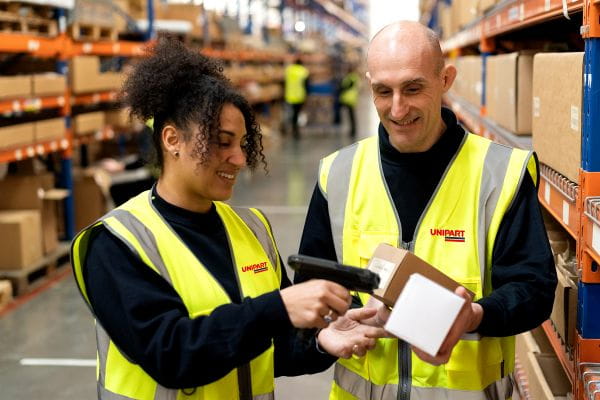
The Unipart Way: our journey to Zero Harm
By Kirsty Summerby, Unipart on 08 September 2026
Achieving safety excellence involves creating an environment where every single employee feels a genuine sense of ownership – both for the safety of themselves and all their colleagues.
Falls from height: progress made, but risks remain
By Orchie Bandyopadhyay on 08 September 2026
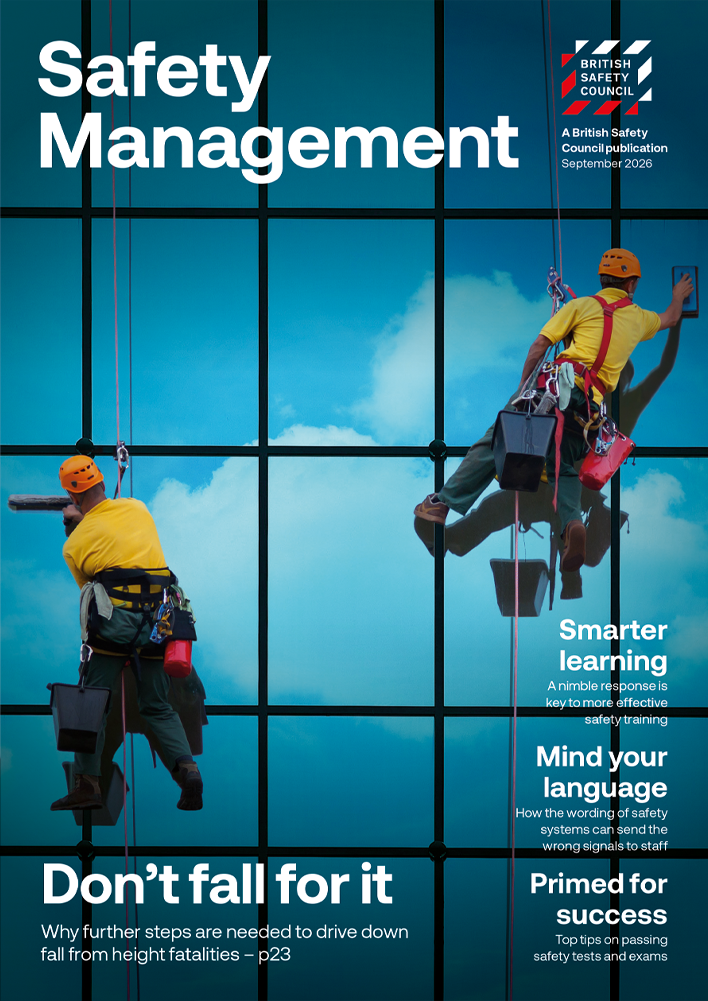
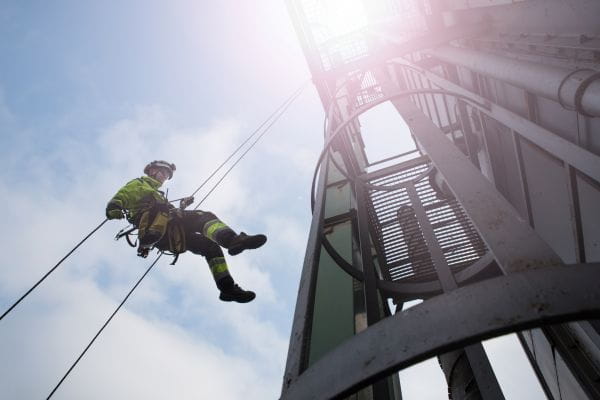
Despite the UK having one of the best health and safety records in the world, falls from height remain the leading cause of workplace deaths in the nation. Although improvements in training, equipment and ongoing educational campaigns have helped to drive down the number of fall injuries in recent years, further work is required to ensure these efforts translate into continuous reductions in the accident rate.