

Combustible waste poses a serious fire risk, so it’s essential facilities managers focus on measures such as effective waste minimisation, storage, management and disposal, to protect buildings from devastating and avoidable blazes.
Features
Why facilities professionals are on the front line of fire risk mitigation
By
on 01 August 2026
When keeping buildings safe for the people who inhabit them, we all know that an ounce of prevention is worth a pound of cure.
The occupancy phase of a building’s usable life will last many decades, and it is beholden to those that look after these places and spaces to make sure that we’re minimising risk of fire now and in the future.
The fire at Union Corner in Glasgow on 8 March is a call to action for how we look at the storage and disposal of waste, especially devices with batteries in them.
 Andrew Gladstone-Heighton, head of policy and research at the Institute of Workplace and Facilities Management (IWFM).
The Scottish Fire and Rescue Service investigation into the cause is still ongoing, but it looks likely that the vape shop, with its attendant amount of battery-powered items, was a major contributor to the spread and intensity of the blaze.
This highlights a key issue: the storage and disposal of e-waste such as vapes, wireless headphones and other semi-disposable or end-of-life items that use lithium-ion batteries presents an increased risk of fire and acceleration of fire in our buildings.
Indeed, there’s a wider conversation here about waste management more broadly. Facilities managers and their colleagues hold the pen on decisions around waste categorisation, handling and disposal.
Practical steps facilities managers can take to minimise waste fire risk
By thoughtfully applying the waste hierarchy, we can minimise the amount of waste going to landfill or even being disposed of in the first instance. This is the first way we can minimise fire risk – through minimising what actually gets thrown out.
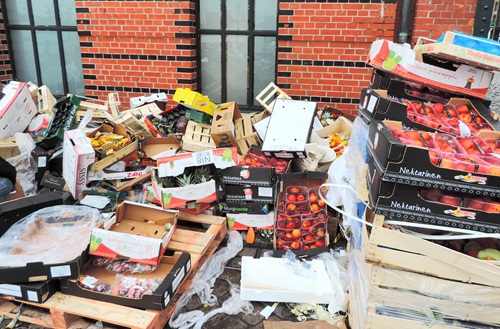 By thoughtfully applying the waste hierarchy, we can minimise the amount of waste going to landfill. Photograph: iStock
Secondly, there is the wider consideration of where we situate our waste disposal and storage. IWFM’s recently published Waste Management Guidance highlights how the materials we choose for bins, and their positioning, can increase fire risk.
It notes that “plastic bins, particularly where there is public access, can be fire hazards from cigarette butts or from deliberately being set alight”. Given this summer’s run of heatwaves and extended dry periods, the risk of a fire establishing itself and spreading from this combustion source is also increased.
And finally, coming back to the story I opened with, facilities managers are essential in “ensuring that items which may cause fire – including lithium-ion batteries, vapes, and any other item with a cable, plug or hidden battery – are not disposed of in the general waste”.
We’re making great strides toward safer buildings, with more rigorous approval and scrutiny of their design and materials usage. Facilities managers need to ensure this great effort is not undone and think seriously about what goes into our workplaces and spaces, and how we handle waste in and around those buildings.
For information and advice from the IWFM, see:
iwfm.org.uk
linkedin.com/company/iwfm/
@IWFM_UK
Andrew Gladstone-Heighton is head of policy and research at the
Institute of Workplace and Facilities Management (IWFM)
FEATURES

Who is the wolf in your life? Listening to the people behind the hard hat
By Inna Cebotari, Kinth Square on 02 October 2026
A new play explores the lives of migrant construction workers in the UK, using humour, real-life experiences and physical theatre to capture the banter, friendships and absurd moments that make life on site bearable, alongside the pressures that often go unseen. Ahead of the play’s premiere in London on 12-14 November, playwright Inna Cebotari explains how Three Little Pigs aims to add to the public debate about how best to support the wellbeing of construction workers.

Eliminating barriers in reporting: how conversational AI can unlock safety engagement
By Julian Taylor, ecoPortal on 04 October 2026
Online reporting systems that require lengthy and cumbersome form filling and typing can discourage workers from reporting safety incidents and concerns. However, AI-powered mobile apps that allow reporting simply by speaking can simplify and speed up the process, boosting reporting rates and overall staff engagement with safety systems and culture.

Why UK employers need to rethink recruitment, retention and support for older workers
By Orchie Bandyopadhyay on 04 October 2026
With workers over the age of 50 now comprising almost one third of the entire UK workforce, recruiting and retaining older workers is now core to the success of the economy. However, not all employers are offering what’s needed to retain and recruit older workers, and ageist attitudes, limited flexible working opportunities, and employment support that doesn’t fit with health, caring, or other responsibilities are leaving too many people locked out of the labour market.