

Businesses need to play their part and ensure their mobile workers have access to basic facilities as public toilets continue to dwindle across the country.
News
Public ‘toilet deserts’ in England: a growing health and safety risk for mobile workers
By
on 23 April 2026
That’s according to Stu Drinkwater, founder of TAL, a platform which connects workers with venues providing access to toilets.
This week, analysis by the Royal Society for Public Health (RSPH) showed that the number of public toilets in England has fallen, leaving just one public toilet for every 15,000 people.
It represents a 14 per cent decrease in the past decade, creating what RSPH describes as ‘toilet deserts.’
 The number of public toilets in England has fallen, leaving just one public toilet for every 15,000 people. Photograph: iStock
While health leaders have warned that this is a risk to health – with half of people restricting their fluid intake when leaving the house – for workers, the problem is far more acute, says Drinkwater.
“The 14 per cent decline in public toilets is more than an inconvenience, it is a growing health and safety risk for the UK’s mobile workforce,” he told Safety Management magazine.
“Millions of delivery drivers, engineers and field-based workers spend the majority of their day on the road, yet are expected to operate without reliable access to basic amenities.
“In practice, this leads to workers restricting fluid intake, losing productive time searching for facilities, or being forced into unsafe and undignified alternatives. We are already seeing the consequences of this play out in public spaces.”
Under health and safety law, the duty to provide access to facilities including clean water, showers and toilets fall under the Workplace (Health, Safety and Welfare) Regulations 1992.
Regulation 20 says that the dutyholder must provide “suitable and sufficient sanitary conveniences (toilets) at readily accessible places.”
Thanks to campaigning by Truckers Toilets UK and others, these regulations were changed in 2017 to apply to places a driver delivers goods to, not just fixed places of work.
With the drastic decline in public provision, the employer's responsibility becomes more urgent to provide toilet access, such as via TAL Services which connects mobile workers to local welfare facilities using an app. Employers pay a small per-use fee, ensuring workers have reliable access while supporting local venues.
“Ultimately, this is not just a public infrastructure issue, it is a workforce welfare issue,” concludes Drinkwater. “Without practical solutions, we risk normalising conditions that would be unacceptable in any fixed workplace.”

NEWS
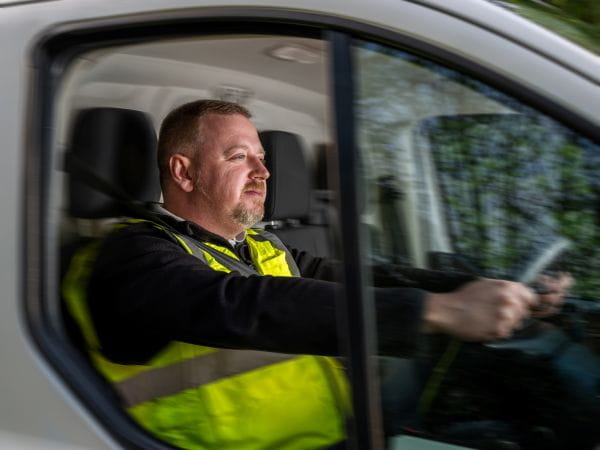
Scheme to recognise commitment to transport staff wellbeing launched by Road Haulage Association
By Orchie Bandyopadhyay on 01 October 2026
A new Wellbeing Recognition Scheme designed to allow organisations across the HGV, coach and van sectors to demonstrate their commitment to improving the health, wellbeing and resilience of the industry’s workforce has been launched by the Road Haulage Association (RHA).

Cost-of-living pressure is cutting into UK workers’ productivity, says report
By Orchie Bandyopadhyay on 04 October 2026
The cost of living is the single largest financial stressor for 62% of UK workers, far outweighing concerns about retirement savings (12%) and building emergency funds (8%), a new study has revealed. Sixty-two per cent of workers admit they do not fully understand the workplace retirement plan they pay into each month, according to TELUS Health’s Q2 2026 TELUS Mental Health Index.

Employers must meet staff to discuss flexible working requests, says first secretary of state
By Orchie Bandyopadhyay on 01 October 2026
Bosses must meet with employees who request flexible working and explain their reasons for any refusals, said Louise Haigh, first secretary of state, in a speech to the Trades Union Congress (TUC) in Brighton on 15 September.