

An awareness campaign has taken to the streets of Sheffield to highlight the growing threat of “silent killer” silicosis to workers across the UK.
News
Dramatic projections in Sheffield shine a spotlight on silicosis as part of Arco campaign
By
on 20 March 2026
Yesterday evening, at three key points in the historic steel city, safety specialists Arco beamed cinematic projections to highlight the invisible yet deadly threat of silica dust exposure, and the urgent need for stronger workplace protections.
Alex Turgoose, Respiratory Product Manager at Arco, explained that the campaign aims to get people talking about a disease that often develops silently.
“Through our Breathing Space activation in Sheffield, we want to bring visibility to a disease that too often goes unnoticed until it is too late,” he said.
“By raising awareness, we hope to encourage employers and workers alike to take proactive steps to protect respiratory health."
 Arco's eye-catching lightshow called for greater awareness, improved protections and stronger action on silicosis. Photograph: Arco
In the UK an estimated 600,000 workers are exposed to silica dust every year, while, tragically, more than 500 construction workers die annually as a result of exposure.
Respiratory disorders cost the wider economy £11.1 billion every year, with £10 billion falling directly on the NHS.
Stronger action
Arco is calling for greater awareness, improved protections and stronger action to safeguard workers across high-risk industries from silicosis, and other potentially fatal occupational lung diseases.
Arco has also advocated for measuring dust exposure in real time and taking advantages of new dust monitoring technologies. Their recommendations were taken forward by the All-Party Parliamentary Group (APPG) for Respiratory Health in its recent inquiry into silica dust.
“Preventative action must be prioritised,” Turgoose stated. “Employers should implement effective controls to remove dust at source, ensure proper ventilation and provide appropriate industry-standard respiratory protective equipment.
“Monitoring crystalline silica levels through real-time exposure technology is also critical to protecting workers and maintaining workplace compliance,” he added.
 Around 600,000 workers are exposed to silica dust every year, while, tragically, more than 500 construction workers die annually as a result of exposure. Photograph: iStock
'Silent killer'
Silicosis is sometimes known as a “silent killer” because of the “invisible” nature of the hazard. In many cases, a worker can be inhaling lethal amounts of dust for years without feeling any immediate ill effects.
It is caused by inhaling respirable crystalline silica (RCS) dust, commonly generated during activities such as cutting, drilling or grinding materials including concrete, stone and engineered stone.
Early symptoms can include breathlessness, fatigue and a persistent cough. In some severe cases, these lead to disability, lung cancer and premature death and an increased risk of secondary conditions, including chronic obstructive pulmonary disease (COPD).
Marek Marzec, a 48-year-old stonecutter, made headlines when he spoke publicly from his hospital bed about a disease which left him in terrible pain and unable to breathe. He died seven months after his diagnosis of silicosis.
Breathing Space
The projections took place across Sheffield City Centre on Thursday 19 March, from 6:30-11:30pm in key sites including Hallam University and the High Street. The initiative is part of Arco’s Breathing Space campaign.
Arco is a UK-based health and safety supplier and consultancy which employs 1,200 people and operates a large National Distribution Centre alongside a network of retail and safety stores. Its core business includes the provision of personal protective equipment (PPE), safety training, and specialist consultancy for high-risk environments such as confined spaces and working at height.
NEWS
Scheme to recognise commitment to transport staff wellbeing launched by Road Haulage Association
By Orchie Bandyopadhyay on 01 October 2026
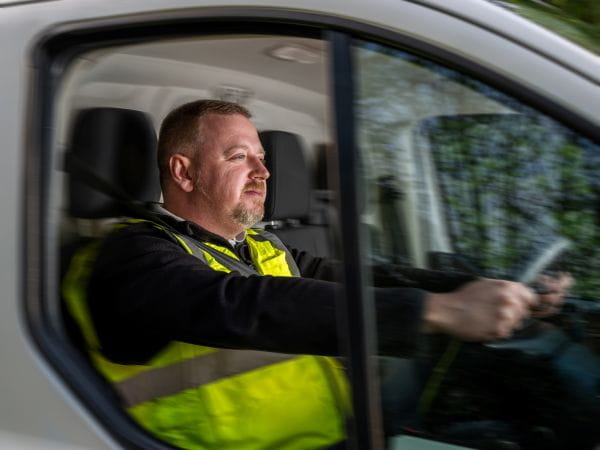
A new Wellbeing Recognition Scheme designed to allow organisations across the HGV, coach and van sectors to demonstrate their commitment to improving the health, wellbeing and resilience of the industry’s workforce has been launched by the Road Haulage Association (RHA).

Cost-of-living pressure is cutting into UK workers’ productivity, says report
By Orchie Bandyopadhyay on 04 October 2026
The cost of living is the single largest financial stressor for 62% of UK workers, far outweighing concerns about retirement savings (12%) and building emergency funds (8%), a new study has revealed. Sixty-two per cent of workers admit they do not fully understand the workplace retirement plan they pay into each month, according to TELUS Health’s Q2 2026 TELUS Mental Health Index.

Employers must meet staff to discuss flexible working requests, says first secretary of state
By Orchie Bandyopadhyay on 01 October 2026
Bosses must meet with employees who request flexible working and explain their reasons for any refusals, said Louise Haigh, first secretary of state, in a speech to the Trades Union Congress (TUC) in Brighton on 15 September.