

New workplace transport training categories due in January mean it is essential to ensure operators of material handling equipment have the necessary training for the exact type of machine they use, and accredited training providers are an ideal source of advice and conversion training.
Features
Why workplace transport training is changing in 2026 and what it means for employers
By
on 14 January 2026
Why workplace and road safety can’t be separated
Many employers still see workplace transport safety and road safety as two separate worlds. One happens in the yard, or the warehouse, or on the construction site. The other happens on the public highway.
But the line between them is thin… and often blurred.
Forklifts, telehandlers and similar equipment don’t always stay behind four walls. They move across loading bays, interact with lorries and often cross public roads to connect sites or fields. Other machines – MEWPs, container handlers, sideloaders - often operate right at the edge of public traffic in ports, airports and construction sites.
That’s why accredited training should never be seen as ‘just a workplace requirement’. It’s also a key part of managing work-related road risk. And with major changes to training categories arriving in January 2026, the responsibility on employers is about to increase.
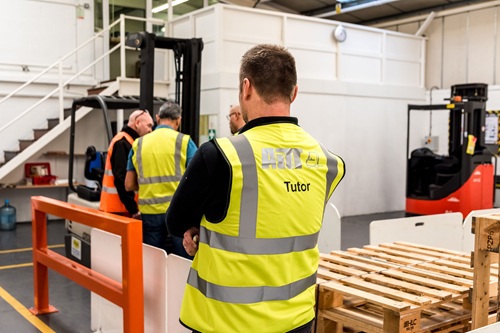 Photograph: AITT
What’s really changing in January 2026?
On 19th January 2026, new workplace transport training categories will come into force. They’re being introduced by the Accrediting Bodies Association for Workplace Transport (ABA) – the group set up, with HSE’s support, to oversee and align the UK’s forklift and workplace transport testing standards.
This isn’t red tape for the sake of it. The HSE-backed review was designed to make testing and machine categories clearer, more consistent and more precise. Machines have changed. The way we classify them for training needed to change too.
Some examples of what’s changing:
- Reach and straddle trucks: the D2 category will be merged into D1, simplifying training while covering the same risks
- Tow tractors: H3, a redundant sub-category, is being removed
- New machine types: the SP1 category is being created for vertical stock pickers, recognising how this truck type has become commonplace in many workplaces.
On paper, the adjustments may look minor. In practice, they draw sharper lines around competence. And sharper lines demand sharper accountability.
Clearer rules mean greater responsibility
In the past, assumptions crept in. If an operator could use one kind of truck, it was often believed they could use another. Sometimes that was true. Too often, it wasn’t.
From January 2026, those assumptions won’t just be risky – they’ll be indefensible.
For example:
- An operator trained only on a low-level order picker cannot be assumed competent on a medium or high-level order picker, even if the controls feel familiar
- A driver with experience on a counterbalance truck cannot simply step onto a multi-directional truck and expect to manage it safely.
Every jump between categories creates a potential competence gap. If that gap isn’t closed with accredited training, it can lead directly to incidents. And when those incidents happen at the boundary between workplace and public road, the consequences can extend far beyond your site.
Training as road safety
This is where the link between training and road risk becomes obvious.
Think about a typical loading bay. A forklift unloads a lorry. A pallet truck moves goods into place. Operators weave in and out of trailers. Mistakes here don’t just endanger warehouse staff – they put visiting HGV drivers at risk too.
On farms and construction sites, the risks are even clearer. Telehandlers and tractors often travel on public roads. If an operator doesn’t understand how to check brakes, steering or tyres, the hazard doesn’t stop at the farm gate.
Accredited training, aligned to the new ABA categories, prepares operators for these crossover risks. For employers, it offers confidence that competence is specific, not assumed. Every hour spent on training is an hour invested in both workplace and road safety.
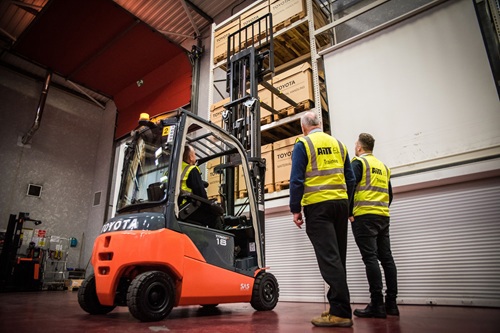 Photograph: AITT
Why accreditation matters more than ever
The ABA changes apply across the industry. But how employers respond will differ. Some will use this as a chance to review and strengthen their training. Others may stick with old habits, assuming the details don’t matter.
That’s a dangerous gamble. It’s why accreditation is critical.
Accredited providers:
- Map training directly to ABA categories, ensuring compliance with the revised framework
- Deliver conversion training where operators need to cross from one category to another
- Provide robust certification and record-keeping - such as AITT’s ACORNS system - giving employers defensible evidence of competence.
- Stay up-to-date with changes, so employers don’t have to interpret complex frameworks alone.
Without accreditation, there is a real risk that training will lag behind industry standards, leaving employers exposed.
Supporting employers through the transition
The good news is that support is available. AITT and the other accrediting bodies are working closely with training providers to ensure they are ready for the 2026 changes. Members will receive updated guidance, resources and technical support to make sure their training aligns fully with the new categories.
For employers, this means the transition doesn’t have to be disruptive. By working with an accredited provider, businesses can ensure their operators are trained to the right standard, at the right time, without unnecessary duplication or confusion.
As Jules Cook, AITT technical manager, explains: “The changes to ABA categories may look small on paper, but they carry real consequences on the ground. Our job as an accrediting body is to make sure training providers – and the employers they support – are technically prepared for those changes. That means giving clear guidance, consistent standards and practical support, so businesses don’t just stay compliant… they stay safe.”
Four steps employers should take today
January 2026 may feel distant, but it isn’t. It’s best to start preparing now:
- Review your fleet and match each machine to the correct ABA category
- Audit operator training records against the new framework
- Identify gaps and plan any conversion or familiarisation training required
- Work with an accredited provider to manage the process.
Acting early avoids last-minute disruption and keeps both workers and road users safe.
The stakes are higher… but so are the standards
The 2026 ABA changes are not a technical footnote. They mark a shift towards sharper standards, clearer competence and greater accountability. For employers, the message is simple: training is not optional, and competence can no longer be assumed.
Workplace and road safety are inseparable. Accredited training, mapped to the new ABA categories, is the most reliable way to protect operators, safeguard businesses and keep the public safe.
Liam Knight, AITT managing director, puts it plainly: “These changes signal more than a reclassification of trucks - they represent a cultural shift in how the industry views competence and safety. Employers can no longer rely on assumptions or outdated practices; leadership teams need to take ownership of training and its impact.
“At AITT, we see accreditation as more than compliance. It’s about protecting reputations. It’s about building trust with customers. And it’s about setting a higher benchmark for the future of workplace transport.”
For more information see:
aitt.co.uk
ABA workplace transport grouping changes – effective 19th January 2026
The ABA’s full review of workplace transport categories comes into force on 19th January 2026. The changes bring clearer boundaries and sharper definitions. For employers, it means training must be more specific, and assumptions won’t be enough.
Here’s what you need to know:
- Reach and straddle trucks
- Old D1 and D2 categories merged into a single D1
- Simpler structure, same risks covered. - Tow tractors
- Redundant H3 category removed
- H1 and H2 remain unchanged. - Vertical stock pickers
- New SP1 category introduced
- Reflects how common rider-operated stock pickers have become. - Rough terrain and telehandlers
- Clearer boundaries across the J-group (masted, telescopic, articulated)
- Sharper split between rough terrain and industrial types. - Low level order pickers
- Will move from the A2 category to a new E0 category, within the
Order Picker group. - Other adjustments
- A new designation, M4, will be introduced under Multidirectional for the Pedestrian Operated Stacker Truck.
Key point: the review also strengthens the need for conversion and familiarisation training whenever operators switch machines or face significant differences in controls.

FEATURES
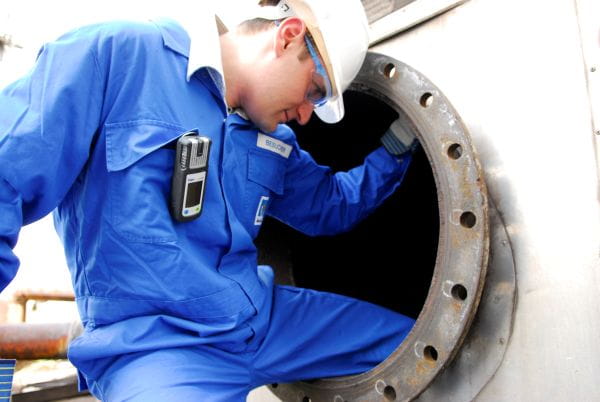
Confined spaces: why training is key to keeping workers safe
By Adam Barker, Draeger Safety UK on 22 September 2026
Suitable training plays an essential role in preventing fatalities and dangerous situations during work in confined, hazardous spaces like tanks, silos and sewers, but it’s essential that any course selected genuinely reflects the specific tasks, hazards and risks workers will be faced with.
Why the future of low-level access starts with rethinking old habits
By Samuel Butterworth, JLG Power Towers on 22 September 2026
Low-level access equipment like powered lifts can help make work at height safer by providing a secure, enclosed working platform, but they can also bring other benefits, such as avoiding the need for awkward stretching to reach work areas, which helps to prevent musculoskeletal injuries.
Why paperwork alone isn’t sufficient MEWP rescue preparation
By Ben Hughes, Horizon Platforms on 22 September 2026
A recent safety awareness day has highlighted the importance of contractors regularly practising emergency rescue from mobile elevating work platforms, rather than relying on one-off training sessions and paper procedures that are not always easy to follow during a fast-moving incident.