

HSE inspectors made a series of proactive inspections last week in Manchester city centre to tackle ill-health on construction sites.
News
HSE inspectors target Manchester construction sites as part of health drive
By
on 28 October 2025
The 12 inspectors visited various businesses and sites on Tuesday 21 October to look at their management of health and safety risks, particularly of asbestos, musculoskeletal disorders, noise and dust.
Construction has some of the highest rates of MSDs along with transport and administrative work, says HSE.
Three-quarters of noisy workplaces have also been found in previous HSE inspections to lack knowledge about using and maintaining hearing protection equipment.
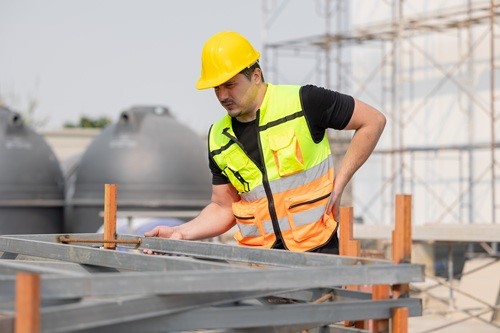 Construction has some of the highest rates of MSDs. Photograph: iStock
Workers in skilled trades are also at particular risk of discovering and disturbing asbestos when working on properties built before the year 2000.
HSE principal inspector Kevin Jones, who was helping to lead the team, said: “Manchester is home to some of the biggest construction projects in the country.”
“By its nature, construction is a high hazard industry. It can be noisy and dusty, with people often working at height and around heavy machinery and vehicles.”
HSE has said its inspections will be “focused more on health priorities” this year, committing to deliver 14,000 proactive inspections in its Business Plan for 2025-26. Out of these 8,000 will have to meet health priorities in asbestos, noise, MSDs and hazardous dust, but also mental health.
The goal is just short of last year’s total, when over 14,700 inspections were completed, but a significant reduction on the 16,800 workplaces inspected in 2022/23.
However, HSE wants to ensure speedier enforcement of inspections findings, this year seeking to reduce “further the time it takes to instigate enforcement action and close out investigations”. “We will complete investigations swiftly and commit further resources only when there is evidence of likely enforcement or a clear opportunity for industry-wide learning,” says the Business Report.
Kevin Jones added: “We need to see that there are good control measures in place and that the health and safety of workers is at the top of the agenda for everyone."

NEWS
Cost-of-living pressure is cutting into UK workers’ productivity, says report
By Orchie Bandyopadhyay on 01 January 0001
The cost of living is the single largest financial stressor for 62% of UK workers, far outweighing concerns about retirement savings (12%) and building emergency funds (8%), a new study has revealed. Sixty-two per cent of workers admit they do not fully understand the workplace retirement plan they pay into each month, according to TELUS Health’s Q2 2026 TELUS Mental Health Index.

Employers must meet staff to discuss flexible working requests, says first secretary of state
By Orchie Bandyopadhyay on 01 October 2026
Bosses must meet with employees who request flexible working and explain their reasons for any refusals, said Louise Haigh, first secretary of state, in a speech to the Trades Union Congress (TUC) in Brighton on 15 September.

British Safety Council calls on UK Government to ban silica-containing materials
By British Safety Council on 20 August 2026
British Safety Council has called on the UK Government to ban the import and export of high silica-containing products within the next five years to protect workers from the risks associated with high-concentration silica-containing materials.