

If you discovered your country was losing up to £78 billion a year, you would want to do something about it, right? Well, that is how much the UK loses to workplace sickness and ill health each year.
Opinion
How do we fix the UK’s poor mental health and wellbeing challenge?
By
on 02 April 2024
To put it in perspective, it’s nearly what we spend on all state schools in England, nearly what the Chancellor raises in corporation tax each year, and it could pay for all nurses in England for at least the next five years.
When the bill for HS2 was spiralling, the Government decided to reallocate the money elsewhere in the transport system. You can’t reallocate the money lost to workplace sickness and ill health. It gets sucked from our small businesses, charities, public sector bodies and larger companies in lost capacity, lower productivity and delays.
What you can do is try and prevent it being lost in the first place. Like the £45 billion that poor mental health is estimated to cost the economy. Or the 32.5 million days lost each year to work-related ill health and non-fatal workplace injuries.
But, how? One way would be to put health, safety and wellbeing at the heart of UK Government strategy to grow our economy, increase productivity and enable people to thrive.
In fact, we think the issue is so important the UK deserves to have a specific Minister for Wellbeing, who would be in charge of a cross-government National Wellbeing Strategy. We’ve called for this in our Manifesto, which we’ve published ahead of the next General Election.
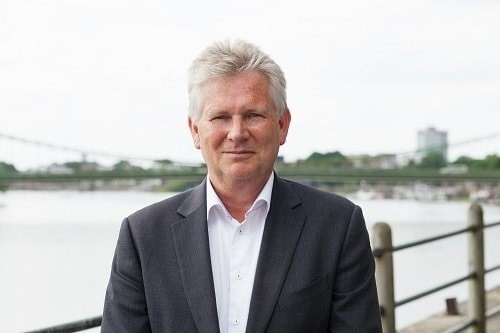 Mike Robinson, chief executive, British Safety Council: "We think the issue is so important the UK deserves to have a specific Minister for Wellbeing."
I was interested to see Mel Stride, the Work and Pensions Secretary, speaking to the Daily Telegraph recently about Britain’s ‘mental health culture’. He suggested that too many “normal anxieties” are being treated by people in work as “some kind of serious mental health condition”, and that doctors are signing them off “as not fit to carry out any work whatsoever”.
While I do not think we should in any way trivialise or diminish people’s mental health, Mr Stride is right to make the distinction between everyday worries and a longer-term mental health condition. He’s also correct that GPs aren’t always the right people to be making spot decisions about whether someone is fit to work, especially given the time pressures.
He also makes a good point when he says, “as a culture, we seem to have forgotten that work is good for mental health”. Although, I would have liked him to have been more specific and said “good work” is good for mental health, as well as wider wellbeing.
Because we know that good work is the key to people feeling a sense of purpose and making connections with others, as well as boosting their own and others’ self-esteem, self-worth and self-confidence.
Had Mr Stride been able to point to the good work of his fellow Minister for Wellbeing, he would have been able to reference the positive impact the Government’s National Wellbeing Strategy was having on employers and staff up and down the country.
The support for small businesses, in particular, which lack an HR team to develop a wellbeing strategy. The incentive via a new skills tax credit for companies that invest in training staff and line managers. And the great innovations being supported by a new corporation tax offset for investment in AI and other new technologies which will benefit people’s health, safety and wellbeing.
Unfortunately, so far at least, all these great ideas remain in our Manifesto. So, Mr Stride was unable to point to them as ways the Government was helping to support people’s mental health and wellbeing, to prevent the economy and his department losing billions more in absence, sickness and ill health.
Perhaps we can encourage him, his fellow ministers and whoever becomes the next UK Government to take up our ideas, so we can stop haemorrhaging more money and start growing our economy for the sake of people’s good health, safety and wellbeing.
OPINION
Building a future worth working in
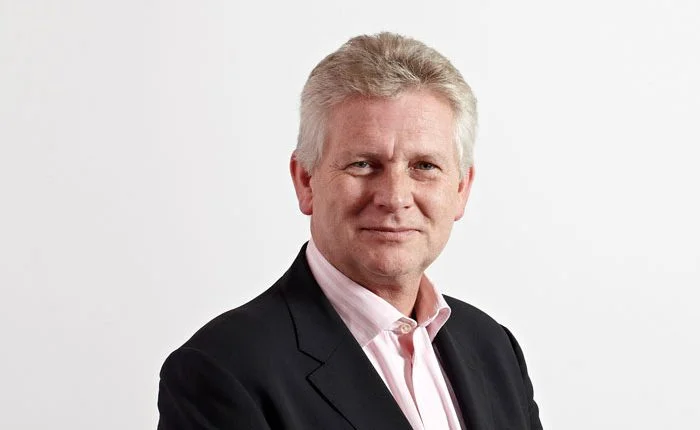
By Mike Robinson FCA, British Safety Council CEO on 12 October 2026
It’s easy to become myopic about the future of work. Take a quick look at the world today and the signs can seem discouraging: political instability, economic volatility, the accelerating disruption posed by AI and climate change. Together, these factors paint a picture of uncertainty that can make our belief in progress seem naïve and tempt us into believing that the future can be no better than the past, that our best days are now behind us. That would be a profound failure of imagination.

Rethinking homes as centres of economic activity (amongst other things)
By Andy Lake, Flexibility.co.uk on 08 October 2026
The decentralisation of work away from fixed workplaces, the rise of AI and demographic changes are creating new opportunities for people to carry out ‘hands-on’ work in the home, such as production of fashion, textiles, food and drink, and delivery of health services and therapies. However, our existing housing stock is not designed to accommodate such functions, so it’s essential that future town planning creates homes that support different kinds of enterprise, both to support business success and the wellbeing of these new home-based workers.
Learning that saves lives
By Mike Robinson, chief executive, British Safety Council on 11 September 2026
Success can sometimes be a problem. The better we become at preventing incidents, the harder it can be to see what is actually preventing them.