

Employers must urgently consider how climate change will affect their businesses and how they will protect the health and wellbeing of their workforces as global temperatures continue to rise, the British Safety Council’s director of education and membership, Dr Julie Riggs, has urged.
News
Employers must act now to protect workers from effects of climate change, as 1.5C threshold breached
By
on 08 February 2024
The statement comes as the European Union’s Copernicus Climate Change Service published data showing that the global mean temperature over the last 12 months was the highest on record, breaching the 1.5C long-term limit set by world leaders in the 2015 Paris Agreement.
During the period between February 2023 and January 2024, the average global temperature was 1.52C above pre-industrial levels and 0.64C above the 1991-2020 average.
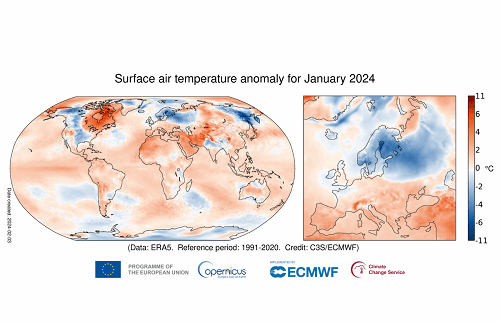 Photograph: Copernicus Climate Change Service/ECMWF
“2024 starts with another record-breaking month – not only is it the warmest January on record but we have also just experienced a 12-month period of more than 1.5C above the pre-industrial reference period,” said Samantha Burgess, deputy director of the Copernicus Climate Change Service, adding that “rapid reductions in greenhouse gas emissions are the only way to stop global temperatures rising”.
Humanity is in “code red”, warned the British Safety Council’s Dr Riggs, and employers and workers will need to adapt and manage the new risks posed by the changing climate.
“We are now accelerating towards 2C of global warming, above which the devastation to our environment and the risks to the health, safety and wellbeing of workers around the world will grow exponentially,” said Dr Riggs. “We would urge all employers to conduct an analysis of climate risk impact to their businesses, including extreme weather, an increase in biological risks and increased risk of accidents.”
 Dr Julie Riggs, British Safety Council: "We are now accelerating towards 2C of global warming, above which the devastation to our environment and the risks to the health, safety and wellbeing of workers around the world will increase exponentially." Photograph: iStock/peepo
A recent report by the Environmental Audit Committee (EAC) warned that as global temperatures continue to increase, heatwaves could claim up to 10,000 lives a year in the UK and cause work-related injuries to spike. The cross-party committee of MPs has urged the UK government to put in place a national heat resilience plan which prioritises passive cooling measures that do not exacerbate global warming.
While the temperature increase seen over the last 12 months may not continue at the current rate, “our window of opportunity is shrinking”, warned Dr Riggs.
“We must act now to save lives and our planet, and we all have a part to play.”

NEWS
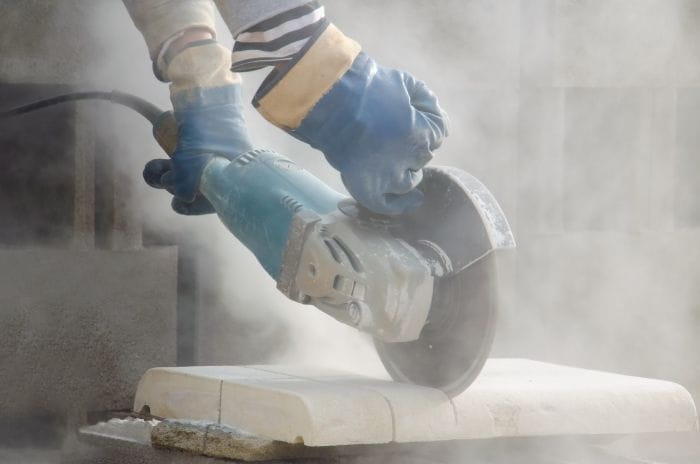
British Safety Council calls on UK Government to ban silica-containing materials
By British Safety Council on 20 August 2026
British Safety Council has called on the UK Government to ban the import and export of high silica-containing products within the next five years to protect workers from the risks associated with high-concentration silica-containing materials.

Mates in Mind launches free suicide prevention training for construction workers
By Thomas Tevlin on 13 August 2026
Mental health at work charity Mates in Mind has launched new digital training aimed at increasing awareness and reducing suicide amongst sole traders and self-employed construction workers to support World Suicide Prevention Day on 10 September.

Hidden Hazards. Recognise Risks. Protect Lives
By British Safety Council on 30 July 2026
British Safety Council launches new flagship campaign to shine a light on hidden hazards in the workplace.