

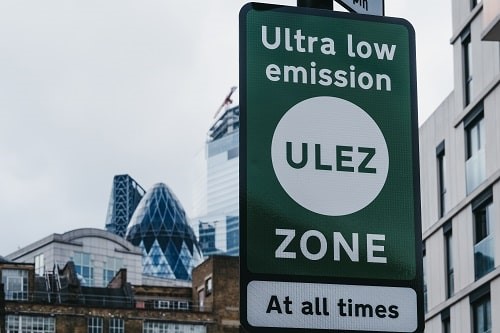
Cast your mind back to summer last year. Do you recall the almighty row about expanding the Ultra-Low Emission Zone (ULEZ) to the whole of Greater London? You may also remember just how vociferous, and political, the arguments became.
Opinion
A big, brave change with bold results. Who knew?!
By
on 31 July 2024
Some campaigners were targeted by some very nasty and, in some instances, life-threatening comments. Local authorities even went to court to try and block the move – and lost. The whole tone of it was extremely heightened.
 British Safety Council chief executive Mike Robinson FCA: "The bold step taken by London, as well as other cities in the UK and around the world, to take the worst polluting vehicles off our roads, must surely be applauded by anyone who cares about the impact of filthy air." Photograph: iStock/Alena Kravchenko
Which, in my view, means the reason behind the expansion got lost: the 4,000 people who die prematurely in London from air pollution each year, and the thousands more who suffer with poor health due to breathing toxic air.
Would we let nearly 40,000 people across the UK continue to die each year if this was any other killer? Why do we still consign many people to an early grave simply because they work outside?
So, when we get a report like the one at the end of July from London’s City Hall, showing that just six months after the ULEZ expansion, small particulates (PM2.5) from car and van exhausts in outer London were 20 per cent lower than they would have been, I think it’s a reason for cautious celebration.
Cautious, because this is clearly the first such report, and will be treated with suspicion by some who doubt its independence. Also, because it is indeed hitting some people in the pocket – even if that’s the point – although the scrappage scheme also supports those most in need, with £184 million paid out, and has seen 250 cars sent to Ukraine, rather than be crushed.
But let’s celebrate that harmful nitrogen oxide (NOx) emissions from cars and vans in outer London reduced by 13 per cent and seven per cent, respectively. And roadside nitrogen dioxide (NO₂) concentrations in outer London are estimated to be 21 per cent lower than they would have been. Or that more than 96 per cent of vehicles now comply with ULEZ, compared with 91 per cent a year ago, which Transport for London has said was better than expected.
What really stands out to me though is that, according to the Mayor, London’s air is set to be within legal limits by 2025 – a full 184 years earlier than previously projected. Yes, you read that correctly!
Before we get too complacent, let’s remember that any amount of the pollutants mentioned above are harmful to health and build up over time in the body. But imagine the positive impact this will have on a whole range of conditions including cancer, cardiovascular disease, respiratory diseases, obesity, as well as reproductive, neurological, and immune system disorders.
The bold step taken by London, as well as other cities in the UK and around the world, to take the worst polluting vehicles off our roads, must surely be applauded by anyone who cares about the impact of filthy air.
Because, whereas many thousands do not get to choose whether they live, work or play where the air is polluted, we do get a choice about how we travel, and our politicians can make it easier for people to use public transport, to cycle or drive cleaner vehicles.
To fight an invisible enemy, we must make it visible, through better monitoring and data. As employers we should continue to do what we can to protect outdoor workers from both direct and indirect pollution, meaning taking action to inform them of pollution spikes, advising on the best routes to take and reschedule work if absolutely necessary.
The current Government may not have found the space in the Parliamentary timetable for a ‘Clean Air Act’ but it must carry on supporting actions taken by regional and city Mayors to improve it. This remains a fight we must win for the sake of future generations to come.
OPINION

Rethinking homes as centres of economic activity (amongst other things)
By Andy Lake, Flexibility.co.uk on 08 October 2026
The decentralisation of work away from fixed workplaces, the rise of AI and demographic changes are creating new opportunities for people to carry out ‘hands-on’ work in the home, such as production of fashion, textiles, food and drink, and delivery of health services and therapies. However, our existing housing stock is not designed to accommodate such functions, so it’s essential that future town planning creates homes that support different kinds of enterprise, both to support business success and the wellbeing of these new home-based workers.
Learning that saves lives
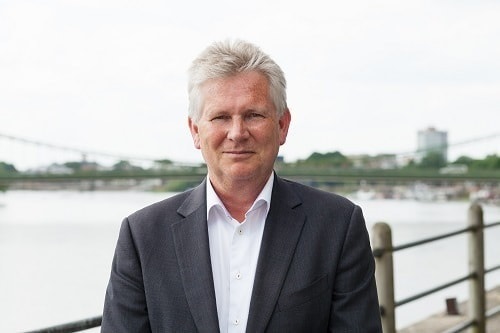
By Mike Robinson, chief executive, British Safety Council on 11 September 2026
Success can sometimes be a problem. The better we become at preventing incidents, the harder it can be to see what is actually preventing them.

Migraine in work: a test of the Government’s plans to Keep Britain Working
By Rob Music, The Migraine Trust on 07 September 2026
Migraine can have a profound, and often avoidable, impact on people’s working lives and careers. The Government’s growing focus on workplace health offers an important opportunity to change this, but only if this common, often disabling and frequently invisible neurological condition is properly understood and addressed by Government, the NHS and employers.