
Throughout my career as a Member of Parliament, I have been a passionate campaigner for the environment and I believe that people across the country, no matter our political differences, believe that there is an inalienable right to breathe clean, safe air.
Opinion
Vehicle MOTs must be improved to reduce air pollution
By
on 14 March 2022
But it is a salient question to ask, given the level of toxic air pollution in our urban areas, is this right really universal?
I used to chair the Education Select Committee and, more than anything else, we aimed to pursue evidence-based policies. So I believe that beyond any doubt, the science and the experts are clear on this; the challenge of air pollution is existential. Around 36,000 people are dying every year due to complications from unsafe levels of air pollution. Critically, around 30 per cent of our noxious emissions as a country come from transport. If we do not address and tackle the challenges in this sector, we will not make inroads in making our air safer and our country more sustainable.
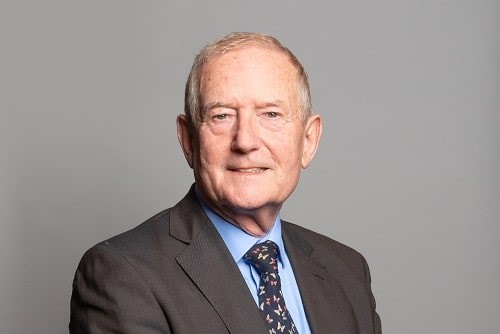 Barry Sheerman MP: "I believe that there is an inalienable right to breathe clean, safe air." Photograph: UK Parliament
We need quick, achievable wins. Limiting and tackling diesel emissions from road transport vehicles is a low-hanging fruit which would have a profound impact on air quality in urban areas across the country. This is why, in February this year, I introduced a Bill to Parliament on diesel particulate filters or DPFs.
A DPF captures and stores dangerous emissions released by the vehicle. We now know that a single faulty filter produces the same amount of pollution as a three-lane, 360-mile-long traffic jam with vehicles that have proper, functioning DPFs fitted. That is the distance from my constituency of Huddersfield to Land’s End.
As a country, we have moved slowly in the right direction. In 2014 and 2018, vehicle MOT tests became marginally more rigorous to ensure the proper working of these filters. But in 2022, we are being left behind and our MOT tests in this area are once again insufficient and out of date. Governments across Europe, such as the Netherlands, Belgium, and Germany, are making real progress in reducing the levels of ultrafine particulate matter through simple improvements to MOT testing.
In the Netherlands, 10 improved models of devices which test the efficacy of these filters are set to be approved by July. The Dutch, using more sensitive particulate technology, are picking up the real efficacy of these filters. This revised test would require improved sensing technology set at 250,000 particles per cubic centimetre.
While checks on DPFs do make up part of the MOT requirements for diesel vehicles, at present, the test only seeks to determine if these filters are ‘obviously defective’ or ‘missing’. This is not good enough and although I have written to the Department for Transport on several occasions on this issue, I was repeatedly told that ‘we already have safeguards in operation’.
The current testing system in the UK picks up only one per cent of faulty filters, but if we adopted the higher standard of sensing technology used in the Netherlands, it is estimated that 15 per cent more filters would be identified as faulty. This would have a profound and immediate impact on air quality in our towns, cities and communities.
The UK should not be a follower in making MOT tests more rigorous, it should be a leader. We continue to hold the presidency of COP26 and there is still a window to show decisive, bold, and thoughtful leadership. The government continues with warm words on the issue of air quality, but until we have action to match them, more will continue to die prematurely.
Therefore, my ask to the House of Commons was simple: let us take this step together and move closer to achieving a goal which we should all share – that our children, grandchildren, friends, family and loved ones are united in their inalienable right to breathe clean air.
Barry Sheerman MP is Labour and Co-operative Member of Parliament for Huddersfield
For more information on the bill and the work of Barry Sheerman MP see:

OPINION
Learning that saves lives
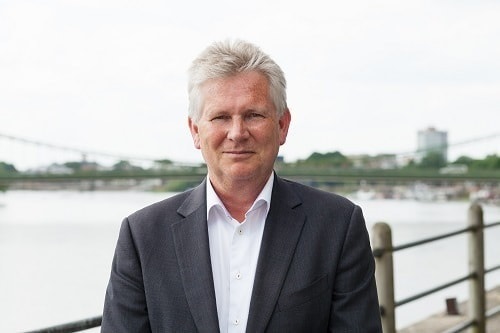
By Mike Robinson, chief executive, British Safety Council on 11 September 2026
Success can sometimes be a problem. The better we become at preventing incidents, the harder it can be to see what is actually preventing them.

Migraine in work: a test of the Government’s plans to Keep Britain Working
By Rob Music, The Migraine Trust on 07 September 2026
Migraine can have a profound, and often avoidable, impact on people’s working lives and careers. The Government’s growing focus on workplace health offers an important opportunity to change this, but only if this common, often disabling and frequently invisible neurological condition is properly understood and addressed by Government, the NHS and employers.
Noise risk and multi-track enforcement: what EHS managers need to know
By Emma Tattersdill, Bexley Beaumont law firm on 17 August 2026
Noise nuisance from an industrial or commercial site can result in costly and time-consuming legal action from regulators and neighbours, but there are practical ways of ensuring noise levels do not exceed acceptable limits and trigger complaints from nearby businesses and residents.