
A thorough cleaning regime is vital to reduce the spread of Covid-19 as businesses begin to reopen.
Features
A safe return
By
on 13 April 2021
April 12th was a key milestone in England’s lockdown calendar – shops, hospitality businesses and gyms were reopened and workplaces slowly started to open their doors.
For most businesses across the UK, there’s an ongoing debate as we negotiate the return to work. The last year has given many non-essential workers the opportunity to explore flexible working, and for some, it’s proving to be a tempting long-term alternative.
The Chancellor, however, has urged businesses to allow staff to return to the office in order to support their careers. While very few businesses will return to normal immediately, most will be navigating some form of hybrid working – with days in the office – and some still working remotely.
With very few businesses looking to stay fully remote, it’s now left to the managers to ensure that they can help facilitate a safe return for their employees. With a recent survey showing that 40 per cent of UK workers are concerned that contact with colleagues in the office will put them at risk of catching Covid-19, it is essential that businesses review their regular cleaning regime to guard against the virus.
However, before they can even implement this, managers need to assess the risk posed by vacant buildings. Most of these office spaces have been left void and unused over the last year, leaving the buildings at risk of potentially hazardous diseases and waste.
Hazards to employee and building health
There is a risk that buildings could have become infested with birds, rodents or other creatures in the absence of a human presence. While a thorough check and (if necessary), potential call-out by an expert to help deal with an infestation may seem obvious, pigeon and other bird guano can be potentially damaging to human health as well as the very fabric of the building. It’s therefore imperative to remove all traces safely, wearing suitable protective equipment to avoid any contact with the bird waste.
Cleaning systems to protect against disease
If the office building was unused or operated with reduced occupancy during the pandemic, there’s a chance of water stagnation, which increases the risk of legionella bacteria being present. Those in charge of maintaining the building and looking after its occupants therefore have a duty to look into and assess whether or not there has been water stagnation.
Legionella can grow and multiply within water systems that are not in constant use. Staff returning to the office could potentially catch deadly Legionnaires’ disease by inhaling small droplets of water (aerosols) in the air transported through the site’s air conditioning system.
In order to ensure that the hot and cold water outlets are safe for use once staff return, they should be flushed weekly, as well as being deep cleaned and disinfected. Air conditioning units will also need to be assessed before they are used again. Generally speaking, smaller units tend not to be a risk. However, larger units, where water is likely to stagnate, will need to be evaluated and then cleaned and disinfected.
Reducing transmission of Covid-19
Once the building has been returned to a safe and usable state for its occupants, there are specific measures that managers will need to take into account and maintain or enact regularly to ensure that the building remains a low-risk environment for Covid-19 transmission.
The government has listed good ventilation indoors as a preventative measure against airborne transmission – both for Covid-19 as well as other diseases such as Legionnaires’ disease. Managers should therefore consider increasing ventilation within areas that have reduced natural air circulation – such as toilets, stairwells, small meeting rooms and corridors. Where possible, they should be looking to open windows and spaces to encourage natural air flow.
Before staff return, the manager should ensure that the entire building goes through a deep clean, and this must be repeated regularly, around once a month. These deep cleans should be carried out in addition to establishing and following a robust cleaning regime. The deep clean needs to follow the standard cleaning and disinfecting regime. Surfaces should first be washed down using a PH-neutral detergent, such as soap and water, then cleaned with a virucidal or antibacterial disinfectant.
Following – or as part of a deep clean – the next stage is a ULV (Ultra Low Volume) fogging of the building. This is a beneficial extra step as the disinfectant used has a greater surface contact time, and will treat areas that may be missed out in the regular cleaning routine. This step will require the team to wear the correct personal protective equipment (PPE) to protect themselves, which is why this is often outsourced to professionals.
Ultraviolet (UV) light can also be used at this point to destroy the genetic material for viruses to thrive, and is especially useful in small, enclosed areas. Teams will also need to wear appropriate PPE to correctly and safely use UV light units as UV can cause damage to eyes and skin.
In addition to deep cleans and a regular enhanced cleaning routine, using nanotech barrier products, borne from a ceramic coating, will provide an extra layer of protection against the virus.
This coating will create a long-term surface coating which bacteria, viruses and germs cannot thrive on and will stay active for a period of time even after regular disinfection and cleaning procedures. Some manufacturers claim this protective layer can last for up to 30–90 days, giving a longer-term defence against the virus than just using a regular enhanced cleaning regime.
It is also imperative that the site’s maintenance and cleaning teams are fully briefed on these practices, so they understand how to carry out the cleaning and disinfection procedures correctly. They should also understand how to get external assistance to ensure the cleaning and disinfection is carried out properly, such as how to call in experts to carry out a deep clean, or carry out fogging and UV light treatments to destroy any traces of viruses.
By adopting these safety and cleaning measures, managers can ensure that buildings are safe for occupancy and provide the greatest protection possible – not only against Covid-19, but also other diseases and hazards as a consequence of the void buildings.
HSE’s guidance on providing a Covid-secure workplace is at: hse.gov.uk/coronavirus
Shaun Doak is CEO at REACT Specialist Cleaning

FEATURES
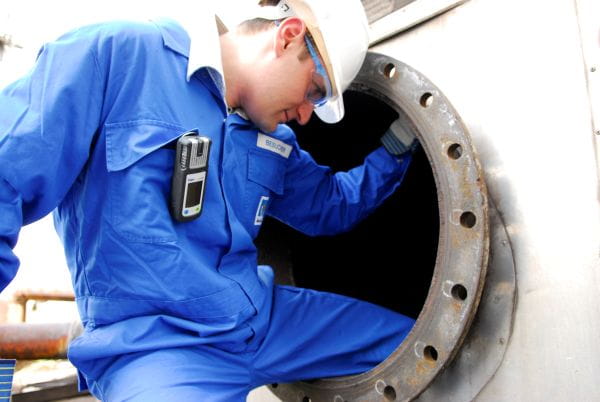
Confined spaces: why training is key to keeping workers safe
By Adam Barker, Draeger Safety UK on 22 September 2026
Suitable training plays an essential role in preventing fatalities and dangerous situations during work in confined, hazardous spaces like tanks, silos and sewers, but it’s essential that any course selected genuinely reflects the specific tasks, hazards and risks workers will be faced with.
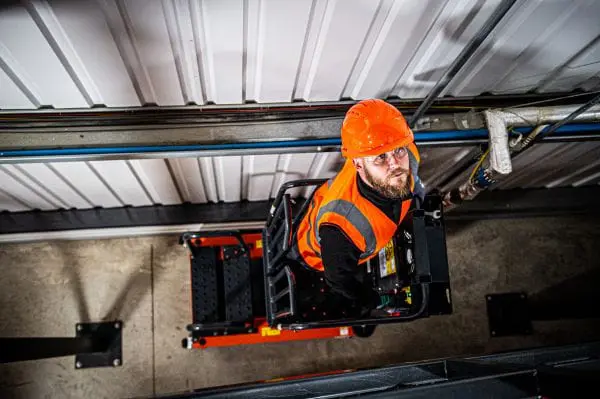
Why the future of low-level access starts with rethinking old habits
By Samuel Butterworth, JLG Power Towers on 22 September 2026
Low-level access equipment like powered lifts can help make work at height safer by providing a secure, enclosed working platform, but they can also bring other benefits, such as avoiding the need for awkward stretching to reach work areas, which helps to prevent musculoskeletal injuries.
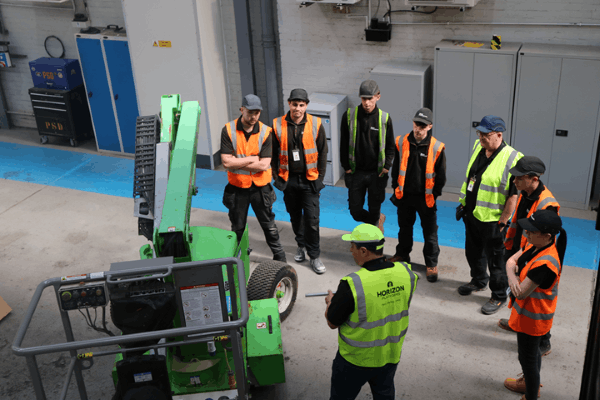
Why paperwork alone isn’t sufficient MEWP rescue preparation
By Ben Hughes, Horizon Platforms on 22 September 2026
A recent safety awareness day has highlighted the importance of contractors regularly practising emergency rescue from mobile elevating work platforms, rather than relying on one-off training sessions and paper procedures that are not always easy to follow during a fast-moving incident.