

Safety culture

    Istock 1081869336 Credit Jay Yuno 600 Min

    Knowledge management in EHS: improving competence, compliance and organisational learning

    Creating a single, digital repository for environmental, health and safety information and knowledge allows a business to effectively and proactively capture, analyse and act on employee and institutional experience and insight, learn lessons from near-misses and incidents, and identify crucial EHS training needs.

    By Dr Keith Whitehead C. Env, British Safety Council on 21 September 2026

    Mike Robinson 3 Med

    Learning that saves lives

    Success can sometimes be a problem. The better we become at preventing incidents, the harder it can be to see what is actually preventing them.

    By Mike Robinson, chief executive, British Safety Council on 11 September 2026

    OFFICIAL Warehouse 20227850 600 Wide Min

    The Unipart Way: our journey to Zero Harm

    Achieving safety excellence involves creating an environment where every single employee feels a genuine sense of ownership – both for the safety of themselves and all their colleagues.

    By Kirsty Summerby, Unipart on 08 September 2026

    Istock 2187628967 Credit Ivanko Brnjakovic 600 Min

    Learning velocity: the new measure of safety maturity

    Safety training has often been delivered on a time-based cycle, such as annual courses and refreshers, but with new hazards and risks emerging at an ever-growing rate, it is essential that employers continuously monitor for changing risks, provide updated training, and check the new knowledge taught is actually making work safer.

    By Dr Julie Riggs, British Safety Council on 07 September 2026

    Istock 1477043858 Credit Shapecharge 500 Wide Min

    Safety talk: what is your safety system really saying?

    We tell workers we want them to speak up when things go wrong, but the words, numbers and models we use in safety management can quietly tell them to stay silent. Choosing our language and symbols with care can rebuild the trust that makes honest conversations about safety possible.

    By Grant Tickle, British Safety Council on 07 September 2026

    Charles Burgess 500 Crop

    How connected communication improves safety culture

    Open, two-way communication between managers and staff about safety problems and concerns is a proven way of improving safety culture and performance, and there are a variety of simple and low-cost ways of achieving this

    By Charlie Burgess, freelance writer on 16 June 2026

    Rail (2) Credit Amey

    Safety as culture: how Amey’s Zero Code still leads the way

    Amey’s Zero Code behavioural framework encourages everyone on-site to take personal responsibility for health and safety, and the root of this approach is creating a psychologically safe environment where everyone has the confidence and authority to stop work and speak up if they see anything unsafe.

    By Robert Doyle, Amey on 16 March 2026

    Meeting About Road Safety MED Istock 2159122673 Credit Skynesher

    Driving accountability: why directors must own road risk

    Successful management of occupational road risk is only possible if company directors take ownership of the process, setting expectations across the business, monitoring performance and setting a good example themselves.

    By Simon Turner, Driving for Better Business on 30 October 2025

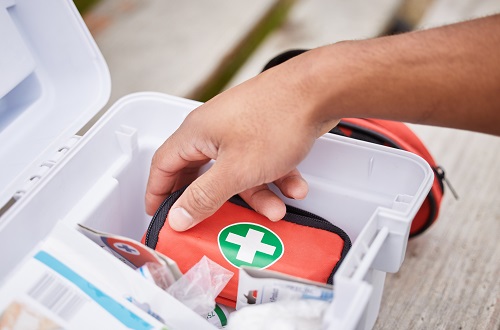
    First Aid Istock MED Peopleimages

    Lack of first aid skills leave a third of workers feeling powerless, finds St John Ambulance study

    Four in five employees genuinely care for colleagues, but couldn’t help them in an emergency such if they had a cardiac arrest or were severely bleeding, new research from St John Ambulance has found.

    By Belinda Liversedge on 29 August 2025

    Freediving Federico Buzzoni (1)

    Freediver, Helena Bourdillon on how trust is the key to productive and happy workplaces

    Helena Bourdillon has survived and triumphed over chronic depression and now freedives to world-beating depths. A star speaker at SHW Live this year in London, her success she says is built on a philosophy of trust, which she nurtures through her five tools. We take a deep dive to explore how this approach can be applied to reducing stress at work.

    By Belinda Liversedge on 31 July 2025