

PFAS (per- and polyfluoroalkyl substances), also known as ‘forever chemicals’, present significant long-term environmental, human health and economic threats for the UK.
Opinion
PFAS, forever chemicals – the pollution crisis highlighting the importance of sound chemical regulation
By
on 01 April 2026
The PFAS problem
Widespread use of PFAS began in the 1950s when they started being manufactured on a large scale. Since then, these manufactured chemicals have become widely used in society across a range of industries and in everyday products, including food packaging and waterproof clothing as well as pesticides and firefighting foams.
The fundamental problem with these chemicals is their extreme persistence, meaning they don’t break down naturally in the environment and instead are accumulating in water, soil, wildlife and people. As a result, PFAS contamination is now widespread across the globe.
While most PFAS remain poorly studied (as there are thought to be more than 10,000 of these chemicals), those that have been studied in-depth have been linked to numerous adverse health effects in animals and humans, such as reproductive and immune system issues, and increased risk of some forms of cancer such as, kidney, thyroid and prostate.
 Heather McFarlane
While PFAS contamination is now recognised as a global issue, its implications for occupational health also remain underexamined. Workers in certain industries can face disproportionately high exposure, often without adequate monitoring, protection or regulatory oversight.
Although PFAS exposure can come from a range of sources, such as water, food and even household dust, exposure in some workplaces is amplified in certain settings where contact with PFAS is more frequent and intense.
For example, studies have found elevated concentrations of some PFAS like PFOS and PFHxS in the blood of firefighters, which can occur through interaction with PFAS-containing firefighting foams, protective turnout gear and through fumes released when PFAS-containing materials and products burn.
Firefighters are not the only group at risk, fluorochemical factory workers have also been found to have high PFAS exposure in the workplace and were some of the first to experience documented health impacts.
For example, DuPont was one of the earliest companies to produce PFAS on a large scale in the 1950s, and was aware of the toxicity of PFOA (now widely recognised as a hazardous and carcinogenic PFAS) long before this information became public. The company internally monitored pregnant employees and revealed PFOA exposure was linked to health problems, with two of the seven infants monitored born with birth defects.
Although PFOA is now banned, many other less well studied PFAS are still used widely across a variety of industries. More recent research shows other occupations like professional ski waxers experience substantial PFAS exposure. Studies show that their PFAS levels often match or exceed firefighters and fluorochemical plant workers and are much higher than levels found in the general population.
 Megan Kirton
It is also thought that other occupations such as textile and waterproofing industry workers, waste management and landfill workers, agricultural workers exposed to contaminated sludge or construction workers, may also be at risk of high levels of PFAS exposure. However, comprehensive PFAS data on many of these occupational groups remain limited or are currently absent.
PFAS pollution is extensive in the UK environment, with the Environment Agency identifying over 10,000 ‘high risk’ sites, highlighting the severity of national contamination. Some UK water sources have been found to have globally significant PFAS contamination levels. For example, the River Mersey in Liverpool has some of the highest concentrations of PFOS and PFOA on record (two well studied carcinogenic PFAS), and the River Kelvin in Glasgow has the second highest concentration of TFA (a type of small PFAS) in surface water recorded globally.
Bentham, a small town in North Yorkshire, has also recorded the UK’s highest known PFAS concentration in groundwater from contamination caused by a local firefighting foam factory.
Continuing to use and manufacture PFAS carries significant financial exposure for businesses, governments and investors through litigation, societal and remediation costs, as well as reputational risk. In 2024, a US court approved that the company 3M must pay up to $12.5 billion to settle claims that they were polluting drinking water with PFAS.
More recently, several former employees of the Italian chemical company Miteni were sentenced to over 100 years jail time for polluting local groundwater and drinking water sources with PFAS. Annual health related costs to PFAS exposure in Europe alone are estimated to be above €50 billion, and total remediation costs are thought to exceed €100 billion per year.
Action needed to tackle forever chemicals
Recognising the risks associated with PFAS, many businesses and investors are starting to take action. A consortium of investors with US$8 trillion under management globally are calling for chemical producers to phase out persistent chemicals, including PFAS. Additionally, BNP Paribas highlight how the societal costs of PFAS pollution far outweigh the value added and therefore support a transition to safer alternatives.
 PFAS contamination is now widespread across the globe. Image: iStock
Additionally, a growing number of UK businesses are already taking steps to phase out PFAS from their products and supply chains, with safer alternatives for many sectors already available. For example, Delipac is a UK manufacturer who produce food packaging free from PFAS, and Britannia Fire Ltd offer PFAS-free firefighting foam extinguishers.
However, we cannot rely on voluntary action alone to solve a problem on this scale. To protect public health, the environment and create a level playing field for businesses, the UK Government must introduce a comprehensive restriction on PFAS that phases these chemicals out of use.
Given the already extensive PFAS contamination found across the UK, decisive action is needed now to prevent further pollution. Restricting PFAS will help meaningfully reduce harmful exposure and future remediation costs, as well as creating opportunities for the UK to lead in developing safer alternatives.
The UK PFAS plan
The recently published UK Government’s PFAS Plan is a first step and acknowledgement of the scale of the issue. The plan contains some positive action including improvements to PFAS monitoring, research, promotion of safer alternatives and consideration for a statutory drinking water standard.
However, many have concluded that the plan does not go far enough to protect from the harmful risks PFAS present. Although the UK is moving forward with a potential restriction on PFAS in firefighting foams, a critical gap from the PFAS plan is any newly proposed restrictions on PFAS from other sources, without which the UK cannot meaningfully reduce pollution.
Given that PFAS-free alternatives are already widely available, and evidence of the associated risks continues to grow, it is troubling that the UK Government has not made preventative action a priority. Taking a proactive approach, such as the European Union’s proposal to restrict all non-essential uses of PFAS, would ensure the root of the issue is addressed, rather than merely managing its consequences. This is why Fidra, alongside other health and environmental NGOs, investors and leading academics, are calling for the UK to align with EU chemical regulation, including the proposed phase out of PFAS.
The wider problem with UK chemical regulation
Unfortunately, ‘forever chemicals’ aren’t the only chemical group of concern. Harmful chemicals, such as bisphenols and flame retardants, are now also widespread. They can be emitted from industrial sites, throughout a product’s use, from landfills and even water treatment plants, with sewage sludge applied to fields as fertiliser being contaminated with a mixture of microplastics and harmful chemicals.
The variety of chemicals found in homes, our workplaces, our bodies and the environment, demonstrates the significant challenge presented to regulators, as well as health and safety professionals, chemical scientists, product designers, environment and sustainability leads, toxicologists and public health experts, with the impact felt across society.
 Waterproof clothing is an everyday product for which PFAS became widely used starting in the 1950s. Photograph: iStock
Before the UK left the European Union (EU), regulations to manage chemicals safely were led by the European Chemical Agency (ECHA). ECHA holds chemical data and combines the efforts of member states’ who can flag chemical concerns, potentially resulting in restriction proposals and bans. However, since leaving the EU, the Health and Safety Executive (HSE) has been the main regulator of chemicals in Great Britain and has admitted to struggling to resource this huge responsibility; Northern Ireland continues to follow EU chemical regulations.
Chemical regulation in the UK needs a rethink. Every river in England has failed to achieve ‘good chemical status’, meaning they are highly polluted with known toxic chemicals. Regulations have not been keeping pace with the volume and variety of chemicals on the market.
Since 2021, the EU has started on 24 restrictions including PFAS in a wide range of uses, whereas the UK has initiated just 3 restrictions including restricting PFAS in firefighting foams, but not in other products. There are therefore not enough restrictions and controls on chemicals to prevent chemical pollution and ensure rivers meet good chemical status.
This wide volume and variety of harmful chemicals in our environment, workplaces, homes and bodies, shows it is not just a few problem chemicals slipping through the net. As well as tackling specific chemical threats like PFAS, we need to make sure the chemical safety net is robust.
Regulators must become faster at filtering out the chemicals that need to be kept off the market or used in only essential limited uses, and instead ensure safer alternatives are put to good use. Since leaving the EU, our chemical safety net has been looking thread bare, putting us all at greater risk.
Chemical pollution and safety
There are some that argue harmful chemicals must be used for safety reasons and no doubt there are instances where this may be true. For example, some have argued that PFAS are needed to repel oil and water in certain PPE, until effective alternatives are found.
But accepting there are some essential uses can be achieved without accepting indiscriminate unnecessary use of hazardous chemicals. A school uniform does not require the same level of oil and water resistance as the PPE for a worker on an oil rig.
There may be instances where PFAS use is necessary whilst alternatives are in development, but that doesn’t mean we have to accept their blanket use, and we can move forward with wide ranging bans whilst ensuring essential use derogations are put in place where needed. For example, countries like France and Denmark have introduced bans on PFAS in food packaging and textiles to start reducing PFAS pollution immediately whilst the EU PFAS universal restriction proposal continues to progress.
Another area where a shared understanding of safety, public health, the environment, chemicals and product design is needed is in furniture. Chemical flame retardants have been added to furniture in an attempt to prevent fire spreading, but chemical flame retardants leak out of products into people and the environment, and some are known to cause cancers and neurological issues.
If we can deliver the same function through alternatives or better product design, we will all be safer. It is also worth noting that chemical flame retardants have negligible fire safety benefits, with toxicologists raising concerns about the chemicals that escape from furniture into our air and bodies, as well as the smoke toxicity caused by chemical flame-retardant use and its potential impact on both fire victims and fire fighters.
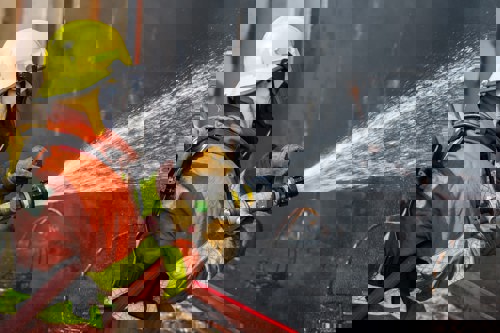 Toxicologists have raised concerns about chemical flame-retardant use and its potential impact on both fire victims and fire fighters. Photograph: iStock
Upholsters are also raising concerns around occupational health risks due to chemical flame-retardant exposure. At a population level, it is clear that chemical flame-retardant exposure is associated with elevated risk of certain cancers and neurological conditions. But at an individual level, it is hard to ascribe a specific cause to a specific health outcome, so chemical impacts are often overlooked.
A way forward
The limited regulation of PFAS in the UK highlights broader weaknesses in the country’s chemical regulatory framework, particularly its reliance on slow, reactive risk assessments rather than precautionary action. Despite growing scientific evidence linking PFAS to environmental persistence, bioaccumulation and serious health risks, UK controls remain fragmented and lag behind more comprehensive approaches such as in the EU.
This reflects systemic issues such as regulatory inertia, insufficient monitoring requirements and the burden placed on authorities to prove harm rather than on industry to demonstrate safety. As a result, potentially hazardous substances can remain in widespread use long after credible concerns have emerged, undermining public health protection and environmental safety.
To manage and use chemicals safely is a cross-disciplinary endeavour that will benefit us all. To ensure the UK does not continue to slip behind EU standards, Fidra alongside other NGOs, academics and wider stakeholders are calling on the UK Government to align with EU chemical regulation. Not only will this reduce trade barriers with our closest trading partner and stimulate UK-based innovation towards safer alternatives, but it will also ensure UK public and environmental health are awarded the same level of protections as our EU neighbours.
Heather McFarlane and Megan Kirton are senior project managers at Fidra
Fidra is an environmental charity working to reduce plastic waste and chemical pollution. Find out more at:
fidra.org.uk
pfasfree.org.uk

OPINION

Building a future worth working in
By Mike Robinson FCA, British Safety Council CEO on 12 October 2026
It’s easy to become myopic about the future of work. Take a quick look at the world today and the signs can seem discouraging: political instability, economic volatility, the accelerating disruption posed by AI and climate change. Together, these factors paint a picture of uncertainty that can make our belief in progress seem naïve and tempt us into believing that the future can be no better than the past, that our best days are now behind us. That would be a profound failure of imagination.

Rethinking homes as centres of economic activity (amongst other things)
By Andy Lake, Flexibility.co.uk on 08 October 2026
The decentralisation of work away from fixed workplaces, the rise of AI and demographic changes are creating new opportunities for people to carry out ‘hands-on’ work in the home, such as production of fashion, textiles, food and drink, and delivery of health services and therapies. However, our existing housing stock is not designed to accommodate such functions, so it’s essential that future town planning creates homes that support different kinds of enterprise, both to support business success and the wellbeing of these new home-based workers.

Learning that saves lives
By Mike Robinson, chief executive, British Safety Council on 11 September 2026
Success can sometimes be a problem. The better we become at preventing incidents, the harder it can be to see what is actually preventing them.