

As the government’s flagship flexible working in schools programme nears its conclusion, we investigate whether it’s a practical solution to schools’ retention and stress crisis.
Features
Beyond the Bell: Can flexible working save the teaching profession?
By
on 13 April 2026
“Flexible working is one of the main reasons why I have quit and the fact that it’s an extremely tough job.”
“It’s sad to see so many teachers desperately trying to get out. I’m in leadership and enjoy my job but it’s all consuming and I have no work/life balance. It is impacting my family life.”
These recent posts from Mumsnet users are a window into the UK’s teacher retention crisis.
While pay and stress are key factors cited as driving teachers out of the profession, a lack of flexibility is also part of the story.
Historically a perk, flexible working has grown to be a staple of working life for a significant number of the British workforce.
Now teachers want some of the same benefits – and they are voting with their feet. According to Education Support’s Commission on Teacher Retention’s 2023 report, Modernising the professional lives of teachers for the 21st Century, 64 per cent of teachers said the promise of more flexible working hours in another sector would make them want to leave.
 Research shows that teachers who work flexibly are more likely to feel that their workload is acceptable and that things done in their life are worthwhile. Photograph: iStock
Faced with some of the lowest retention rates in Europe, the government has funded the Flexible Working Ambassador MATs and Schools (FWAMS) programme to spread the word and get more schools adopting flexible working. Run by Capita, the programme has acted as a pipeline for schools to access leaders pioneering flexible work.
Now, as the programme sunsets on 31 March, we ask whether it’s been a success and what lessons have been learned. Can the very job that relies on fixed hours and physical presence adapt to a world leaning towards increasing flexibility? And what is the cost of not doing so?
The retention crisis
First, let’s look at retention and recruitment. Considering the investment in time and money it takes to become a teacher, the data is not good. Up to 15 per cent of newly qualified teachers leave within their first year and a third of teachers leave the state sector within their first five years, according to House of Commons 2026 research.
Latest OECD data shows that England has one of the worst teacher retention rates among developed nations.
Examples of flexible working
Through FWAMS, schools have been encouraged to consider the following types of flexible working:
- Job sharing
- Part time roles at all levels, including leadership
- Compressed hours
- Secondments
- Flexible hours
- Planning Preparation and Assessment (PPA) flexibility
- Personal/wellbeing days.
Ambassadors for change
Acting for the programme, appointed ambassadors for each of England’s regions have been sharing how flexible working can support resilience and wellbeing, even among the most testing of job roles.
They include Debra Rutley, CEO of Aspire Schools, a multi-academy trust based in Buckinghamshire.
Aspire serves pupils with Social, Emotional, and Mental Health (SEMH) needs or those who have been excluded from mainstream schools. Some pupils self-harm and others have made attempts on their own life.
Flexible working enables Aspire staff to give more of themselves in a job that is already demanding, says Debra. “We think that given the fact that we need extraordinary people in our schools, [flexible working] is a way to recruit and retain extraordinary people so that they’ve got the ability to give as much as they can to the children,” she shares.
Teachers at Aspire are able to do PPA at home, parents can pick their child up from school once a week and they also offer job shares. “We do retain staff because they fear they’re not going to get those same benefits elsewhere.”
 Flexible working among educators has been found to have no impact on pupil learning. Photograph: iStock
Logistics
Rolling out flexible working can be challenging in the school environment where there is so much to be done, including after-schools’ clubs and a timetable with little room to flex.
Some ambassadors on the programme have discussed openly through webinars the challenges. “We ensure there’s ‘parity in process’, that the process [of deciding on flexible working requests] is consistent and the same for every colleague, while understanding not everyone can have the same offer,” said one leader from Charles Dickens primary school in London.
Alison Wootton, an ambassador for the West Midlands Region, explains it’s important school leaders start from a position of openness, while acknowledging that not every request can be granted.
As a headteacher for the Hales Valley Trust, a trust of seven primary schools, she was supported to go down to three days a week to spend more time with family. “Our Trust has a culture that enabled me to have confidence to approach the CEO about flexible working,” she explains.
“It’s important that staff understand that the trust is open to requests for flexible working but that the answer may be ‘no’. The arrangement must work not just for the member of staff but for the organisation. Where this can be achieved, it supports the retention of good staff. In addition, current and prospective employees can see that, where in the future, they may need to request flexible working, the Trust will be open to discussion.”
At Aspire they have a progressive attitude towards flexible working, meaning that there’s a dynamic aspect to managing requests.
“Everyone can ask for part-time work no matter what your job is, even if you’re the CEO,” says Debra. “And you can make changes to that part time work. Something could happen tomorrow in your home circumstances that you need more mental capacity for, or a bit more time to spend with my family. It doesn’t mean to say it’s that [the arrangement] is always going to be the way. We constantly [review it].”
Evidence for impact
Recent results from a survey conducted for the Department for Education, Working lives of teachers and leaders, indicate a correlation between working flexibly and having more positive wellbeing scores and other job satisfaction measures.
Those working flexibly were more likely to report very high or high life satisfaction (62 per cent) than those not working flexibly (52 per cent).
Those working flexibly were more likely to feel that their workload is acceptable and that things done in their life are worthwhile. They were also more likely to feel valued by their school.
 By doing planning work at home, teachers can get ahead on household tasks in the same way the British workforce are doing in other sectors. Photograph: iStock
Impact of FWAMS?
The data would suggest the FWAMS programme has had some impact. Flexible working in schools is on the increase. According to the working lives of teachers survey from 2025, almost half of all teachers and leaders had some form of flexible working arrangement in place in 2024 (46 per cent), higher than before the programme in 2022 (40 per cent).
But there’s inequality in how the benefit is being enjoyed, with 53 per cent of leaders working flexibly compared with just 45 per cent of teachers. Just under a quarter (24 per cent) of new teachers, or ECTs, had flexible working arrangements in place.
Flexible working is also more common among white educators (47 per cent) than among ethnic minority groups (38 per cent).
There’s also discrepancy between secondary and primary education, so that PPA time offsite is more common in primary than secondary (23 per cent vs. five per cent respectively) and the same for job sharing (12 per cent vs. one per cent).
What do we know of the barriers?
One of the biggest complaints from school leaders that Debra hears is that pupils need consistency; the same teacher in front of the children. Therefore job sharing is a no-go.
To this, Debra counters: “You could also have consistently bad, consistently tired. Consistently doesn’t want to be there because they’re stressed. I would rather have two members of staff who are happy in their job and offer consistency of approach to the children. You don’t have to have the same face in front of them, you have the same kind of values and way of working. We have loads of part time workers across Aspire and we have consistency in how we work with children.”
Job-sharing has been found to have no impact on pupil learning. The majority (62 per cent) of surveyed parents, whose child had been taught by job-sharing teachers, reported that this had a positive or null impact on their child, according to a FWAMS toolkit.
Future plans and reflections
Future plans for the FWAMS programme are to produce a new toolkit for the summer term. The existing website run by Capita will close and a new website from the government will replace it with advice on creating a flexible working strategy and managing requests.
It’s positive to see the number of schools taking up flexible working grow over the course of the FWAMS. There is inequality however in who enjoys the benefits – the fact that new teachers are less likely to work flexibly is concerning, as this cohort is more likely to quit the profession.
Flexible working and schools might initially be seen as ridiculously incompatible, but ambassadors are proving that it can work and not only that, but it can have a huge impact on retention and wellbeing.
“Flexible working in a school won’t ever be as much as somebody who works on a computer, it’s never going to do that,” says Debra. “But it’s creating opportunities so that you can have an afternoon where you’re not teaching and you can leave straight away at lunchtime and you can go to the doctors if you need to, you can pick up your children and the expectation is you will do your planning whenever it suits you and your lifestyle. I think we need to move to that.”
Flexible working in schools toolkit here

FEATURES

Confined spaces: why training is key to keeping workers safe
By Adam Barker, Draeger Safety UK on 22 September 2026
Suitable training plays an essential role in preventing fatalities and dangerous situations during work in confined, hazardous spaces like tanks, silos and sewers, but it’s essential that any course selected genuinely reflects the specific tasks, hazards and risks workers will be faced with.
Why the future of low-level access starts with rethinking old habits
By Samuel Butterworth, JLG Power Towers on 22 September 2026
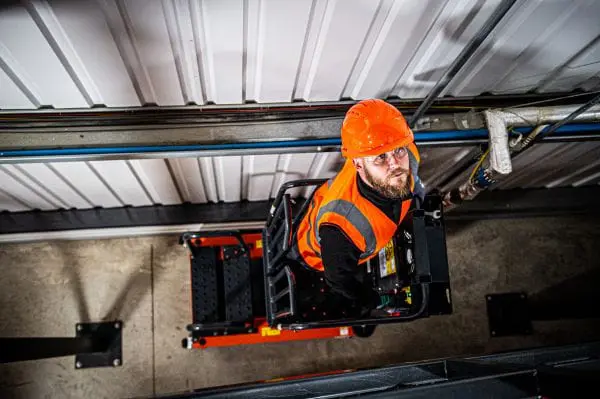
Low-level access equipment like powered lifts can help make work at height safer by providing a secure, enclosed working platform, but they can also bring other benefits, such as avoiding the need for awkward stretching to reach work areas, which helps to prevent musculoskeletal injuries.
Why paperwork alone isn’t sufficient MEWP rescue preparation
By Ben Hughes, Horizon Platforms on 22 September 2026
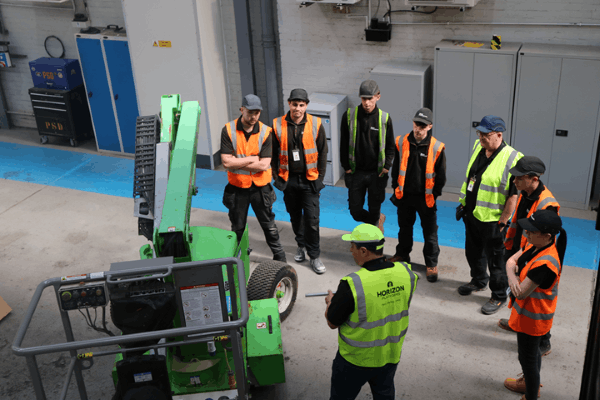
A recent safety awareness day has highlighted the importance of contractors regularly practising emergency rescue from mobile elevating work platforms, rather than relying on one-off training sessions and paper procedures that are not always easy to follow during a fast-moving incident.