
Director of health and safety at the Canal & River Trust, Anne Gardner-Aston, shares what she’s most proud of achieving in the past four years since taking on a new role in the wake of a turbulent moment in the charity’s history.
Features
“I’m not prepared to sit back and assume everybody’s fine”
By
on 02 January 2026
“Nothing really prepared me for the extent of the work involved in managing the canal network. They are a feature of the landscape, they are just there, they just exist and are part of communities and they run through in a very gentle and calm way – and goodness me, it’s a different reality to what is going on in the background.”
Director of health and safety at the Canal & River Trust, and former head of operational safety at London’s Metropolitan Police, Anne Gardner-Aston is assuring us that she didn’t come to the role for some peace and quiet.
Far from it. While the 2,000-mile-long network of canals and reservoirs in England and Wales, which is the charity’s remit to maintain, might be a place of leisure for many, these waterways also have an essential, functional role.
 Anne Gardner-Aston: "Every day there is some sort of unpredictability."
“The canals are critical national infrastructure,” she underlines. Once the routes of industry in helping to supply materials and goods to factories in the Industrial Revolution, today they support our environment. Canals can hold back water and prevent flooding (though they can also worsen flooding if they breach), act as a network for moving large volumes of water (for use in our drinking water) and are a freshwater habitat for numerous species.
But the canal network is around 250 years old and therefore fragile. “Some canals go for miles before they reach a lock, so the amount of water that’s held in by those, pinned in by washwalls [built at the water’s edge to stabilise the bank] that are hundreds of years old. It just takes one heavy storm… and they can be vulnerable, because of erosion or whatever reason,” says Anne.
“You never know when something’s going to happen”
Specialist skills and hard graft in all weathers are required to mend and maintain walls, sluices, embankments and other components of a canal system: “Construction and civil engineering are a big part of what we do. During the winter, we have a huge programme of works when the network is not so busy; lock gates that need replacing, draining and working on the sub structure.”
Prolonged, heavy rainfall, like that which caused the collapse of the auxiliary spillway of Toddbrook Reservoir in 2019 and necessitated the evacuation of a nearby town, call for a unique emergency response.
In short anything might happen and it does: “This is not a factory where we’re doing the same thing day in day out and very routine and predictable. It’s just not. Every day there is some sort of unpredictability that is injected in.”
“You never know when something’s going to happen,” she continues. “They call it in the safety world, chronic unease – you have to be quite nimble, quite dynamic and flexible.”
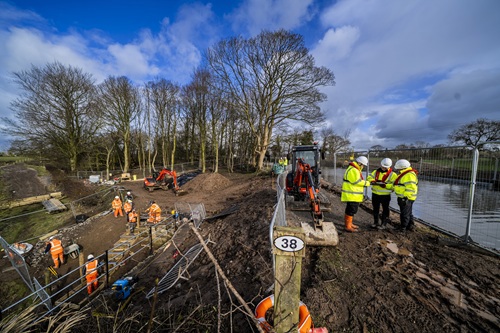 Construction and civil engineering are a big part of the Canal & River Trust does. Photograph: Canal & River Trust
"We talk about safety all the time"
Anne was appointed four years ago to the newly created role of director of health and safety. How has it gone?
There are 1,800 employees and 5,000 regular volunteers at the Canal & River Trust. It’s a lot to oversee, along with public safety. An early priority therefore was governance – what she calls getting the line of sight of issues from bottom to the top.
“We had to make sure we had at each level of the organisation appropriate, detailed conversations about safety and safety performance,” she says. “Right from tier one briefings and daily team meetings – what we are doing and what’s the risk profile of this or that, and the risk assessments – taking place throughout the regions and then through to the board. The most important thing for me was to get that bit in place, so that I knew there was a consistency of those conversations happening.”
She’s also put what she calls a ‘relentless’ focus on safety. “It’s got to be on every meeting agenda, every time the frontline managers get together. I write a safety blog for our monthly magazine. So almost forcing safety forward into the spotlight becomes twofold – it’s impossible to ignore and also, it tells the organisation and the workforce that we care enough about them to make this a constant thing.”
“They might think ‘here we go again’, but I’m not prepared to just sit back and assume that everybody’s fine or assume they understand what’s going on. It’s my job to encourage people to work safely, it’s my job to recognise where things are going astray and make sure that we’re catching up with that. So, yes, there is a huge focus on safety - we talk about it all the time.”
 Photograph: Canal & River Trust
Learning from tragedy
This is good safety leadership, but there was a particular imperative for hiring a new director and appointing Anne in particular, who brought strong strategic skills.
Her appointment came on the back of a tragedy that totally shocked the organisation and its close community of employees. In April 2021, Clive Porter, who was working as a boat licensing ranger, was tragically murdered by someone living on one of the boats. He had been putting an enforcement notice on a canal boat when it happened.
“It was a lone working activity, but he wasn’t doing anything particularly risky at the time,” says Anne. But the incident shone a spotlight on safety and, in particular, revealed improvements that were needed in its strategic management.
“The role Clive and many others across the Trust were undertaking were happening independently of central scrutiny because there was no data collection, there was no visibility on what was happening,” states Anne.
The heartbreaking event coupled with an “accident frequency rate that was up at a level that was intolerable to the board” meant that a director of safety was duly sought.
Building a dashboard
So, governance has been a priority. But also, data. Anne and her team of six have built a bespoke data system to monitor and improve safety performance across the network using language that people on the canal bank use and recognise. It’s been a challenge and is a justified achievement: “The amount of information on what was happening out there when I started, there was none – only what I could go out and find for myself.”
Employees now log incidents (lagging indicators) but also positive interventions and hazard spots – collectively called ‘Safety Improvement Opportunities’. The work to get all this information coming in has paid off. “In 2021/22 we had about 800 or so positive interventions reported and we’re probably upwards of 6 or 7,000 being reported now of various types, safety improvement opportunities generally. We categorise those according to our six health and safety promises. We are able to say, our people have noticed this, we have fixed this.”
Datasets update overnight to the dashboard, so she knows more or less “to the hour” what’s happening on the network and spot trends in real time. Data is visible to all senior managers, so they can see where accidents are happening, their context and decide how to manage them.
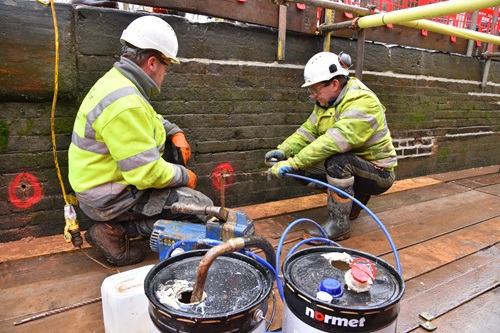 Photograph: Canal & River Trust
Priorities – bringing down volume risks
How has the data helped form priorities for the next few years? “Working off all the data that we’ve collected we know that we’ve honed our priorities into two sections,” she says.
The first section is fatal risks of which there are six and volume risks, which include “a lot” of slips, trips and falls. “We have heritage infrastructure, lots of cobbles; uneven bits and pieces, lots of slippery grass – people slipping off boats, holes appear on the edges of the canal which are sometimes hidden by vegetation,” she explains.
There are also manual handling injuries, being injured by machinery and the welcome influx of volunteers means that the age profile at the Trust is older than before. “Those are our big three volume risks.”
Then the fourth and fifth volume risks are threats and aggressive behaviour. The Trust is a charity, but it also has statutory responsibilities, for example issuing and checking boat licences, and this can be a trigger for boaters and members of the public. “A lot of our people are subject to abuse and verbal assault. Sometimes physical assault. So, a little about lone working in there but a lot about threat assessment and how we support staff afterwards – particularly people who are in the firing line and have the accumulated effect of it. It’s hard to manage.”
As for priorities, she says: “The data is telling us that we broadly have to bring down the number of those volume risks.”
Safety differently – a blueprint for change
How to achieve this? She’s an advocate of deploying the safety differently model. First coined by Sidney Dekker in his book of the same name, it proposes among other principles that people are not the problem to control, they are the solution.
It’s a less procedural and rules-based and a more human philosophy of safety, which seeks to trust people to work safely and successfully through empowerment and support.
She explains how it has and continues to be instrumental in tackling those volume risks. “It’s a concerted, focused approach that enables our people to have a look at a problem through their own lens. We’ve got to enable our people to be able look at their individual circumstances and contexts and manage those risks effectively for them.”
In the past, the organisation has employed regional safety advisors and so for Anne, ownership of the risk has been one of the culture shifts to make. “It’s been a huge culture shift from someone working alongside you on safety and then being responsible for it yourself. But that’s the whole idea – safety ought to be managed close to the risk.”
They also have a ‘just and fair culture’ at Canal & River Trust, something that also has its roots in the Safety Differently school.
“We assume that if an accident or anything goes drastically wrong that there’s an organisational reason why that’s happened and then we work back from there,” she says.
“It’s very rare we get down to bad choices. Even if we do, we then explore those choices to see was it a Hobsons choice for somebody – did they have the right information? So, we try as far as we can to start from a no blame culture, we start from that organisational responsibility.”
Tackling fatal risks tends to be more prescriptive. There’s less leeway for interpretation and context when working at height or with hazardous substances.
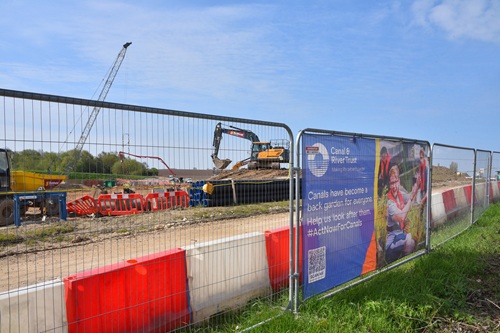 Photograph: Canal & River Trust
Power to stop
Safety culture does come into play though in moments of crisis, she says. During heavy storms (as we write Storm Claudia is raging), workers might have to go out sometimes in the middle of the night to help. That’s when an authentic health and safety culture – one that puts its people first – is key. “One of our promises is power to stop – we give people complete permission to say I’m not doing it,” she says.
She would see it happen in the police – people forgetting their own safety in the urgent needs of a moment. One young police officer died falling through a fragile roof light in pursuit of someone.
She asks that her staff always sense check decisions they might later regret: “Just because it’s your job, I say ‘please go home to your family at the end of the night.’”
On not projecting a ‘leadership’ persona
As a safety leader, what has she learned about leadership through this role? She says it’s taught her to always speak on a level with people: “I think it’s easy to go into new roles particularly at exec level believing that you must project confidence in everything you’re doing, a bit of swagger perhaps, to be seen as the person everybody comes to for that wisdom.”
“It’s quite common across organisations. And actually, I don’t think that would have worked here. It’s quite democratic, collegiate and there are people that have deep specialisms. I’d never hope to understand what they’ve learnt over 30 years so I have to defer to people and in many ways that’s the way that leadership really works here. You’d probably find my colleagues would say the same thing – do what you do best but there are other people who know more than you, but then you meet at some point.”
It’s been essential to listen to arrive at solutions. “Whether there’s a compromise or whether you ask them to try it out and come back with the results. So, it’s brought out humility in me. I always say, ‘never assume that you know what you’re talking about until you give it first contact with reality.’”
Supporting people to go out and do heroic tasks in all weathers seems like superhero’s task. Someone with 20–20 vision who has a bird’s eye view of what’s going on in our locks, canals and reservoirs, and can swoop down if needs be and stop accidents from happening. (metaphorically speaking).
So we ask an appropriate question: What would be your superpower? “My superpower would be getting decisions right every single time. See into the future and make sure the decision is spot on.”
“I often go over what I’m thinking before coming to ultimate decision because sometimes you’re dealing with life and death,” she continues. “That’s never to be underestimated.”
FEATURES
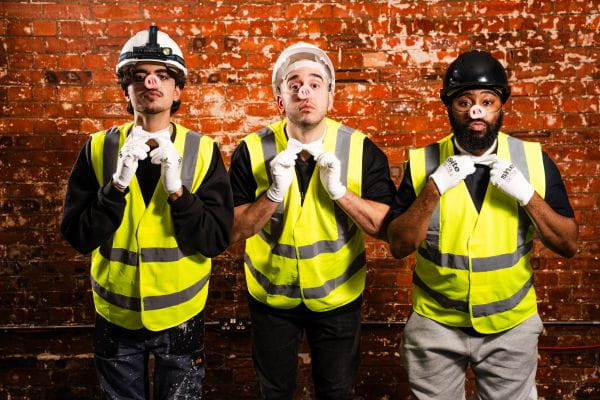
Who is the wolf in your life? Listening to the people behind the hard hat
By Inna Cebotari, Kinth Square on 02 October 2026
A new play explores the lives of migrant construction workers in the UK, using humour, real-life experiences and physical theatre to capture the banter, friendships and absurd moments that make life on site bearable, alongside the pressures that often go unseen. Ahead of the play’s premiere in London on 12-14 November, playwright Inna Cebotari explains how Three Little Pigs aims to add to the public debate about how best to support the wellbeing of construction workers.
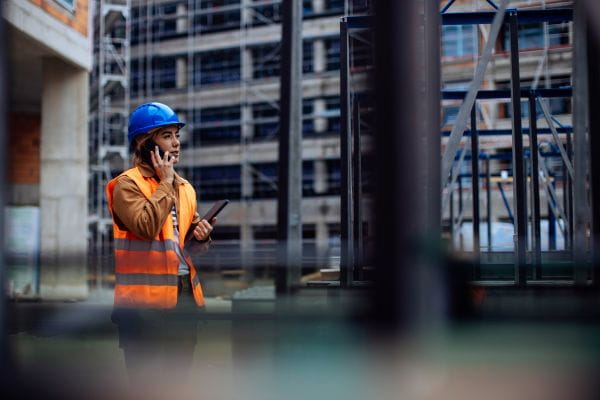
Eliminating barriers in reporting: how conversational AI can unlock safety engagement
By Julian Taylor, ecoPortal on 04 October 2026
Online reporting systems that require lengthy and cumbersome form filling and typing can discourage workers from reporting safety incidents and concerns. However, AI-powered mobile apps that allow reporting simply by speaking can simplify and speed up the process, boosting reporting rates and overall staff engagement with safety systems and culture.

Why UK employers need to rethink recruitment, retention and support for older workers
By Orchie Bandyopadhyay on 04 October 2026
With workers over the age of 50 now comprising almost one third of the entire UK workforce, recruiting and retaining older workers is now core to the success of the economy. However, not all employers are offering what’s needed to retain and recruit older workers, and ageist attitudes, limited flexible working opportunities, and employment support that doesn’t fit with health, caring, or other responsibilities are leaving too many people locked out of the labour market.