
At the end of November, I had the privilege of presenting top-performing organisations with our prestigious Sword, Globe and Shield of Honour awards, recognising their achievements in health, safety, environmental and wellbeing management. It’s something I relish doing every year, and this time was no exception.
Opinion
How can we support our people better in a changing world?
By
on 02 December 2024
Indeed, it was particularly special. Because not only did one organisation – Unipart Logistics – win all three of the Honours, they did so for the second year running. Not only that, the first organisation from outside the UK – DEWA (Dubai Electricity and Waste Authority) – also achieved this impressive ‘treble’.
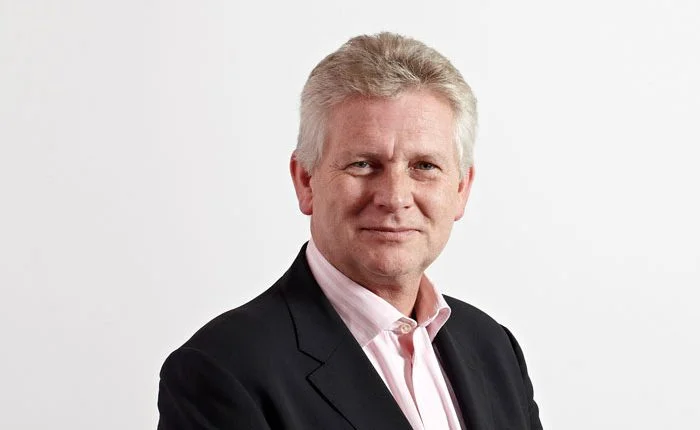
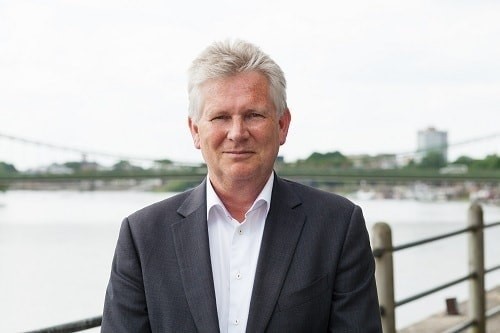 British Safety Council chief executive Mike Robinson FCA: "Humans have always lived with change, but the change we are seeing today is not just rapid, it's meteoric."
What’s really exciting is that these are the only organisations so far to achieve our new Shield of Honour, which was introduced last year to recognise excellence in wellbeing management. We knew it would take time, given any organisation applying must have achieved a top ‘five-star’ rating in either our Wellbeing audit, or both the Health & Safety and Wellbeing Supplementary audits. They must then demonstrate to an independent adjudication panel their track record and culture of best practice.
For any organisation, this is an exceptional achievement. To do it in a world where rapid social, political and economic change are now the norm is particularly impressive. Humans have always lived with change, but the change we are seeing today is not just rapid, it’s meteoric.
How employers can support their people to thrive in the face of change was the focus of a report we recently published with the Institute of Occupational Medicine, called Being Well in a Changing World. This research looked at how employers currently seek to improve workplace wellbeing, what drives or prevents them in this, and where the opportunities are for improvement.
Change of the speed and magnitude we’re seeing, while offering huge opportunities, could risk rolling back health, safety and wellbeing standards, and leave workers worse, not better, off. A lack of time, funding, or a lack of priority being given by employers, could prevent them from providing timely support and simply exacerbate rising levels of workplace stress and anxiety we’re already seeing – leading to worsening health and safety outcomes.
Our joint report is frank about why, as employers, our current approach is falling short, and sets out a direction of travel for how we can get there. It makes five key recommendations for how we can better support workers’ wellbeing in the face of change.
First, that better measurement is required to facilitate better understanding. We believe this can be achieved by creating and adopting measures of wellbeing, through a set of standardised metrics, by which wellbeing can be assessed, allowing for consistency and comparability. Second, that health, safety and wellbeing should be viewed as a virtuous circle with workplace wellbeing offerings aligned with wider occupational health and safety strategies, understanding that healthier and happier workers are also safer workers.
Next, it recognises the need to grow the good practice evidence-base, to foster an industry-wide culture that encourages organisations to learn from each other, through the sharing of wellbeing data, resources and best practice; collectively raising wellbeing standards. The fourth recommendation is to adopt a holistic approach to wellbeing integrating physical, financial, emotional and psychological needs to improve overall health and wellbeing, inside and outside of the workplace.
Finally, our report recommends designing solutions for a diverse workforce by creating wellbeing strategies that apply organisation-level targeted solutions on a person-by-person basis. It also recommends interventions for specific groups; in recognition of the fact that wellbeing needs differ between different people. To find out more, please download the full report here.
OPINION
Building a future worth working in
By Mike Robinson FCA, British Safety Council CEO on 12 October 2026
It’s easy to become myopic about the future of work. Take a quick look at the world today and the signs can seem discouraging: political instability, economic volatility, the accelerating disruption posed by AI and climate change. Together, these factors paint a picture of uncertainty that can make our belief in progress seem naïve and tempt us into believing that the future can be no better than the past, that our best days are now behind us. That would be a profound failure of imagination.

Rethinking homes as centres of economic activity (amongst other things)
By Andy Lake, Flexibility.co.uk on 08 October 2026
The decentralisation of work away from fixed workplaces, the rise of AI and demographic changes are creating new opportunities for people to carry out ‘hands-on’ work in the home, such as production of fashion, textiles, food and drink, and delivery of health services and therapies. However, our existing housing stock is not designed to accommodate such functions, so it’s essential that future town planning creates homes that support different kinds of enterprise, both to support business success and the wellbeing of these new home-based workers.
Learning that saves lives
By Mike Robinson, chief executive, British Safety Council on 11 September 2026
Success can sometimes be a problem. The better we become at preventing incidents, the harder it can be to see what is actually preventing them.