

Police have told families affected by the Didcot Power Station collapse that they are doing “everything in their power” to complete the investigation.
News
Police renew pledge to find answers on Didcot seven-year anniversary
By
on 23 February 2023
The message was released on Thursday 23 February, which marks the seventh year since four workers lost their lives.
Thames Valley Police Deputy Chief Constable, Jason Hogg said: “Our thoughts and deepest sympathies are today with the families.
 The joint Police and HSE investigation into Didcot is ongoing. Photograph: iStock
“We continue to investigate this incident looking at offences of Corporate Manslaughter, Gross Negligence Manslaughter and Health and Safety at Work Act offences.”
The joint investigation is being conducted by Thames Valley Police with the Health and Safety Executive.
The incident happened on 23 February, 2016 when demolition workers Mick Collings, Chris Huxtable, Ken Cresswell, and John Shaw were preparing to demolish a boiler house at the site of the Oxfordshire power station. The structure suddenly collapsed and they were buried under tonnes of rubble.
It is a “hugely complex” investigation, say the Police with “vast amounts of evidence and witness statements” involved.
Police have already carried out over 1,920 witness interviews and sifted through almost 900 tonnes of evidence, reported the BBC.
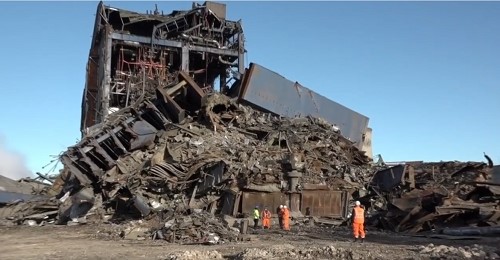 Didcot collapse. Photograph: Thames Valley Police video
But a safety campaign group, which has been supporting the families of the deceased workers, expressed “grave concern” that the investigation has taken so long to conclude.
“Justice delayed can be justice denied for the families and leaves current workers exposed to the risks,” said the statement released by Hazards.
Gail Cresswell, wife of Ken Cresswell also commented in the statement: “We can’t believe it has taken seven years and still no end in sight. We still have no answers for our men who just went to work.”
Tia Huxtable, 18, daughter of Chris Huxtable, paid tribute: “My dad Chris was the most loving heart-warming person you could ever meet, always had a smile on his face, he worked for his family.
“Seven years on and still no answers, still no explanation on why my dad lost his life the way he did.”
The boiler house at Didcot A power station was a steel framed building with the boilers suspended from the superstructure and above ground level to allow for their expansion.
At the time of the collapse, it was being prepared for explosive demolition which was to take place on 5 March, a process which involved cutting the structure to weaken it.
When the incident happened, the rubble from the collapse was so extensive and unstable, it took over six months before all five of the workers’ bodies could be recovered.
Deputy chief constable, Jason Hogg added they would continue with “unwavering determination” to find answers: “I know that the families are still waiting for the answers about what happened to their loved ones.
“We will continue to do everything in our power to complete our joint investigation as soon as possible.”

NEWS
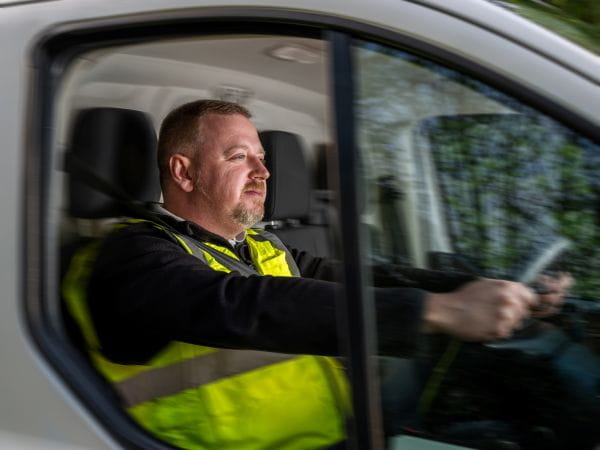
Scheme to recognise commitment to transport staff wellbeing launched by Road Haulage Association
By Orchie Bandyopadhyay on 01 October 2026
A new Wellbeing Recognition Scheme designed to allow organisations across the HGV, coach and van sectors to demonstrate their commitment to improving the health, wellbeing and resilience of the industry’s workforce has been launched by the Road Haulage Association (RHA).
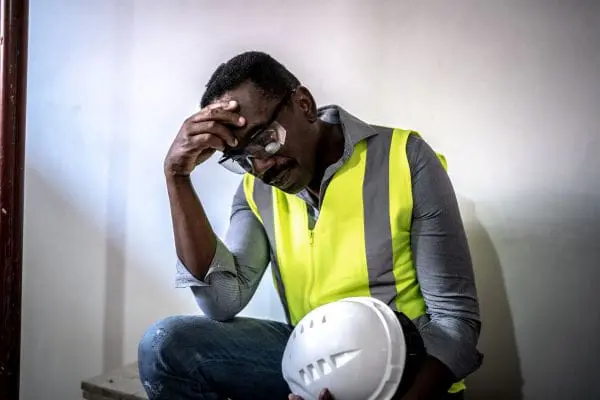
Cost-of-living pressure is cutting into UK workers’ productivity, says report
By Orchie Bandyopadhyay on 04 October 2026
The cost of living is the single largest financial stressor for 62% of UK workers, far outweighing concerns about retirement savings (12%) and building emergency funds (8%), a new study has revealed. Sixty-two per cent of workers admit they do not fully understand the workplace retirement plan they pay into each month, according to TELUS Health’s Q2 2026 TELUS Mental Health Index.

Employers must meet staff to discuss flexible working requests, says first secretary of state
By Orchie Bandyopadhyay on 01 October 2026
Bosses must meet with employees who request flexible working and explain their reasons for any refusals, said Louise Haigh, first secretary of state, in a speech to the Trades Union Congress (TUC) in Brighton on 15 September.