

HSE has issued revised safety guidance for those supplying, buying or hiring inflatable play equipment such as bouncy castles following several high-profile incidents in recent years where children have been killed and injured while playing on such equipment.
Features
HSE issues safety advice on bouncy castles
By
on 01 February 2019
HSE has issued revised safety guidance for those supplying, buying or hiring inflatable play equipment such as bouncy castles following several high-profile incidents in recent years where children have been killed and injured while playing on such equipment.
The guidance provides advice on topics such as ways of ensuring the inflatable has undergone the appropriate safety tests; the correct set-up of the equipment; the appropriate use of anchorage points and the maximum safe wind speed in which an inflatable can be used.
HSE announced plans to review its guidance on the correct operation and inspection of play inflatables following a number of high profile incidents over the last two years. This included the death of a seven-year-old girl after a poorly anchored bouncy castle blew away from its moorings at an Easter fair in Harlow, Essex, in March 2016.
An HSE spokesperson said: “Recognising concern around this issue, we have carried out significant engagement with the industry, including representatives of both fairground operators and inspection bodies. We have shared the updated guidance with our colleagues in the local authorities.
“We will continue to work with the relevant stakeholders across the fairground and entertainment industry, including inflatable devices, to keep visitors safe.”

FEATURES

Who is the wolf in your life? Listening to the people behind the hard hat
By Inna Cebotari, Kinth Square on 02 October 2026
A new play explores the lives of migrant construction workers in the UK, using humour, real-life experiences and physical theatre to capture the banter, friendships and absurd moments that make life on site bearable, alongside the pressures that often go unseen. Ahead of the play’s premiere in London on 12-14 November, playwright Inna Cebotari explains how Three Little Pigs aims to add to the public debate about how best to support the wellbeing of construction workers.
Eliminating barriers in reporting: how conversational AI can unlock safety engagement
By Julian Taylor, ecoPortal on 04 October 2026
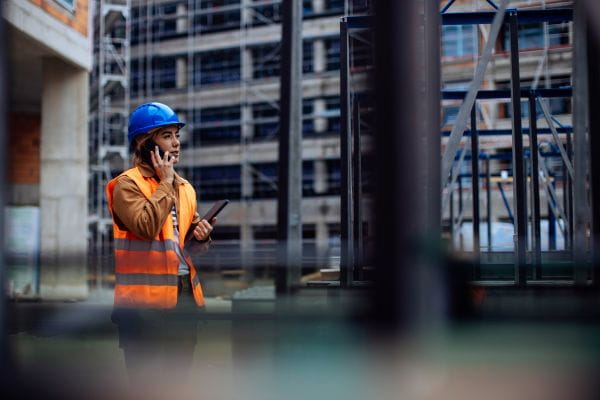
Online reporting systems that require lengthy and cumbersome form filling and typing can discourage workers from reporting safety incidents and concerns. However, AI-powered mobile apps that allow reporting simply by speaking can simplify and speed up the process, boosting reporting rates and overall staff engagement with safety systems and culture.

Why UK employers need to rethink recruitment, retention and support for older workers
By Orchie Bandyopadhyay on 04 October 2026
With workers over the age of 50 now comprising almost one third of the entire UK workforce, recruiting and retaining older workers is now core to the success of the economy. However, not all employers are offering what’s needed to retain and recruit older workers, and ageist attitudes, limited flexible working opportunities, and employment support that doesn’t fit with health, caring, or other responsibilities are leaving too many people locked out of the labour market.